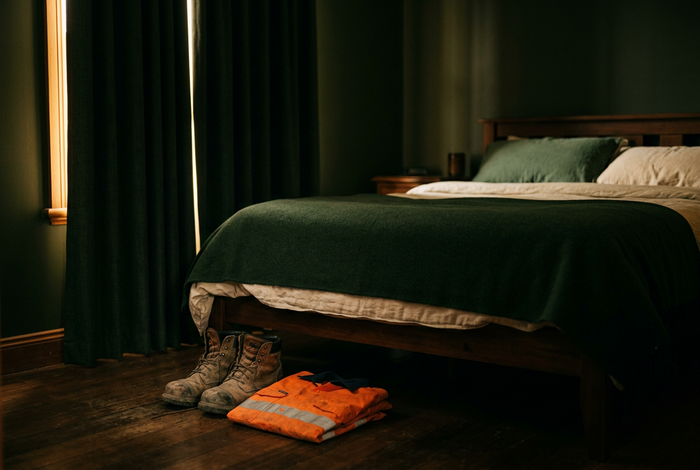

I work 12-hour rotating shifts. I have for years. And I can tell you firsthand that bad sleep does not just make you tired — it wrecks your gut. Bloating on night shifts. Sluggish digestion. Brain fog that no amount of coffee fixed. For a long time I thought the shift work was killing my sleep. Turns out the relationship was running both ways — my gut was also killing my sleep.
That clicked for me when I started reading the 2026 research properly. Not wellness blogs. The actual journals.
The Bidirectional Relationship Between Your Gut and Your Sleep.
A 2026 study published in Nature Communications looked at 6,941 participants and found that lower gut microbiome alpha diversity — basically, fewer species of bacteria living in your gut — was directly associated with poorer sleep quality, later chronotype, and greater social jet lag. Let me put that plainly: if your gut microbiome lacks diversity, you are more likely to sleep badly, go to bed later than your body wants, and feel wrecked when your schedule shifts.
The relationship runs in both directions. A 2026 systematic review in the Journal of Sleep Research confirmed that sleep deprivation alters gut microbiome diversity and taxonomy in both human and animal studies. You sleep badly, your gut suffers. Your gut suffers, you sleep badly. It is a loop. And if you are doing shift work, drinking on weekends, travelling across time zones, or just chronically under-slept — which most Australians are — you are almost certainly stuck in that loop right now.
Practical takeaway: If your sleep quality is inconsistent, look at your gut health first. They are not separate problems.
The Gut-Brain Axis: What Is Actually Happening Inside You
This is the part I find genuinely fascinating as a biotechnologist. Your gut and brain are in constant two-way communication through what scientists call the gut-brain axis. This involves the vagus nerve, immune signalling, and the production of neurotransmitters in your gut itself.
Here is what most people do not realise: approximately 90 to 95 percent of your body’s serotonin is produced in the gut, not the brain. Serotonin is a direct precursor to melatonin — your primary sleep hormone. If your gut microbiome is disrupted, that serotonin production is disrupted, and melatonin synthesis downstream takes a hit. A 2026 review published in the Journal of Alimentary Research found that probiotics and postbiotics can modulate sleep through the gut-brain axis via vagal, immune, and endocrine pathways — and that gut microbiota directly influences melatonin production.
A comprehensive review in Brain Medicine in November 2025, led by Professor Lin Lu from Peking University and collaborators across China and the United States, synthesised the mechanisms clearly: gut microbiota influences sleep through metabolic pathways involving short-chain fatty acids, neuronal pathways including the vagus nerve and hypothalamic-pituitary-adrenal axis, and immune system modulation. Patients with chronic insomnia consistently show decreased microbial diversity. Same pattern shows up in obstructive sleep apnea.
Practical takeaway: Sleep is not just a brain problem. It is a whole-system problem that starts in the gut. Feed your bacteria, and you feed your sleep cycles.
What Destroys Your Gut-Sleep Relationship (And What Most People Ignore)
Let me name the main culprits. Shift work — I know this one intimately. Circadian disruption from irregular schedules is one of the fastest ways to break down gut microbial rhythmicity. The Nature Communications 2026 paper specifically identified coffee intake timing as a factor that mediates social jet lag through specific bacterial species including Clostridia. Timing your coffee badly amplifies the damage.
Then there is diet. A low-fibre diet means fewer short-chain fatty acids — specifically butyrate, propionate, and acetate — being produced by your gut bacteria. Butyrate in particular has been shown to directly support gut lining integrity and reduce inflammation pathways that interfere with sleep quality. A 2023 review in the International Journal of Molecular Sciences found that sleep deprivation and gut dysbiosis create a compounding cycle of neurological impairment, inflammation, and worsened metabolic function.
Alcohol is the hidden one. Many people think a glass of wine helps them sleep. It disrupts your gut microbiome acutely, worsens sleep architecture, and reduces the kind of deep, slow-wave sleep your brain actually needs to repair. Shift workers, athletes in heavy training blocks, and anyone running on four to six hours of sleep are especially vulnerable to this spiral.
Practical takeaway: Audit your timeline. Are you eating late? Drinking alcohol? Hammering caffeine after 2pm? Your gut bacteria operate on circadian rhythms just like you do. Disrupt the schedule, disrupt the bugs, disrupt the sleep.
How to Rebuild the Gut-Sleep Connection
Here is what I actually do, and what the science supports.
Prioritise fibre diversity above all else. Research consistently shows that microbial diversity correlates with sleep efficiency. More diverse bacteria means more serotonin precursors, more butyrate, more stable circadian signalling. Eat a variety of plant foods — not just one or two types of vegetables. The variety is what feeds different bacterial species.
Add live probiotics consistently. Not all probiotics are equal. What matters is live cultures in sufficient numbers, delivered consistently. This is exactly why I built Milenium — I could not find a probiotic drink that was genuinely functional, dairy-free (I’m lactose intolerant and casein-allergic), and not loaded with sugar. Passionmint Oasis and Regal Apple-Pine are part of my daily routine specifically for this reason. Live cultures every day, without the dairy hit. You can find them at milenium.com.au/shop.
Fix your sleep timing before you try to fix your sleep duration. Consistency of sleep and wake time stabilises your gut microbiome’s circadian rhythm. One consistent wake time seven days a week does more for gut and sleep health than any supplement.
Manage the shift work reality. I cannot avoid rotating shifts. But I can eat my highest-fibre, most diverse meals in the earlier parts of my active window. I can keep my probiotic intake consistent regardless of shift pattern. And I can avoid alcohol on my days off when I know the next shift rotation is coming.
If you want to go deeper on this — including what I eat, how I structure my meals around training and shifts, and the exact protocols I use — my wellness library has more: milenium.com.au/blogs/wellness-library.