
I am lactose intolerant and allergic to casein. That eliminates whey protein entirely for me. No negotiation. For years I rotated through plant proteins that either tasted like chalk, clumped in the shaker, or left me bloated by mid-morning — which, when you are training daily and working 12-hour rotating shifts, is not a minor inconvenience. That is your whole day gone.
So when I say I have tested a lot of plant proteins before landing on one I actually use and recommend, I mean it.
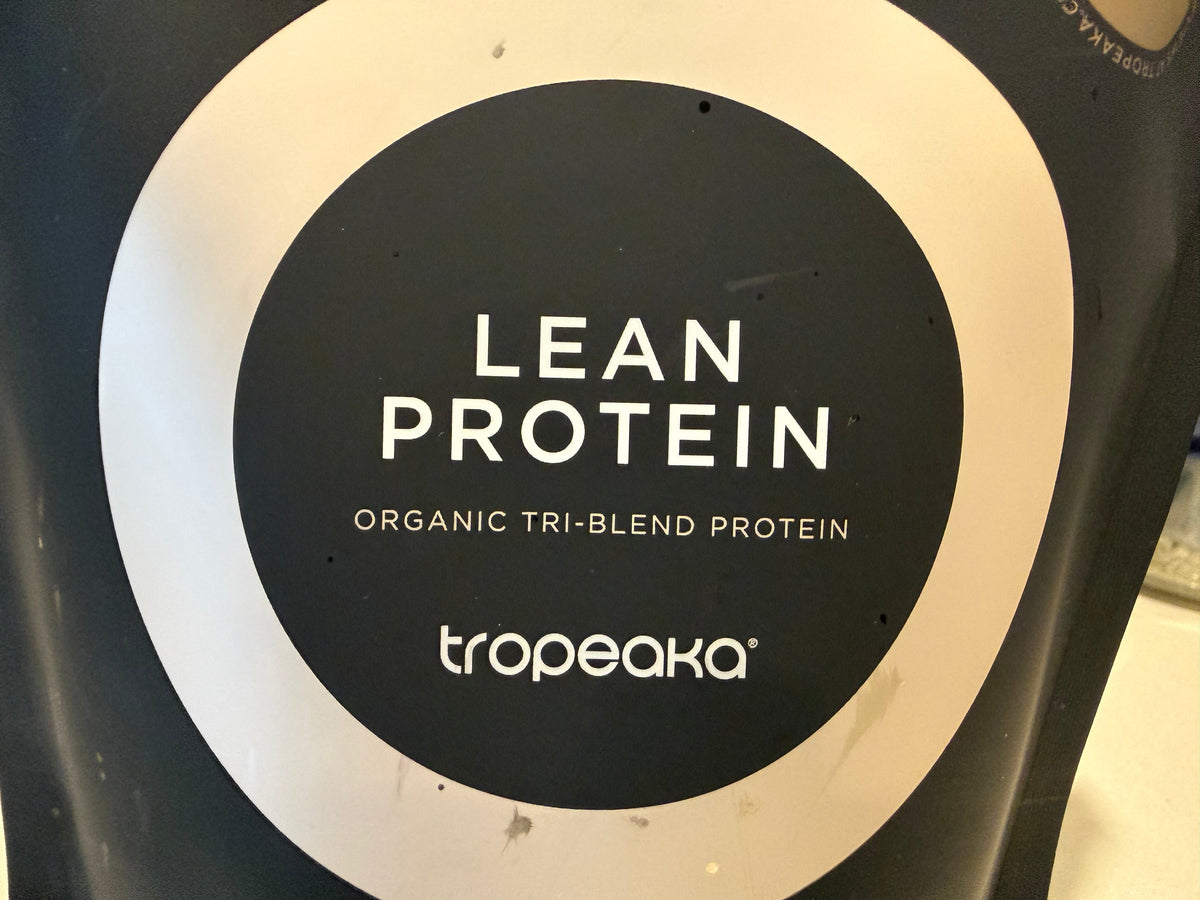
Tropeaka Lean Protein Chocolate is the one I kept coming back to. And after running it through every format I could think of — plain water, coconut yogurt, protein puffs, corn cake batter — I want to break down exactly why, and what the science behind this formula actually says.
Before anything else: protein powders are food supplements, not medicine. They do not treat, cure, or prevent disease. What a quality protein powder does is fill a genuine nutritional gap — helping you hit your daily protein targets conveniently, supporting muscle repair after training, and helping control hunger. That is it. And done well, that is genuinely valuable.
What Is Actually In This Powder (And Why It Matters)
The foundation of Tropeaka Lean is what they call a tri-blend — pea protein isolate, sprouted brown rice protein, and pumpkin seed protein — making up 84% of the formula. This is not an arbitrary combination. Each protein has a specific amino acid profile, and their gaps cancel each other out.
Pea protein isolate is high in lysine and branched-chain amino acids. Lysine is the amino acid most commonly deficient in plant-based diets, and BCAAs — leucine, isoleucine, and valine — are the ones most directly involved in triggering muscle protein synthesis after training. Pea protein isolate also reduces post-meal appetite signals, which is why you genuinely feel full after it.
Sprouted brown rice protein covers the gap pea protein leaves. Pea is low in methionine; rice is high in it. Sprouting the rice first reduces phytic acid — the anti-nutrient that would otherwise block mineral absorption — making the protein more bioavailable than standard rice protein. A 2024 study in Medicine and Science in Sports and Exercise (Van Der Heijden et al.) found that a plant-based protein blend like this stimulates post-exercise myofibrillar protein synthesis equivalently to whey in resistance-trained adults. That is the research directly busting the myth that plant protein cannot build muscle as effectively as dairy.
Pumpkin seed protein is the one most people overlook. It adds a natural fibre content that slows digestion, extends satiety, and feeds your gut bacteria. It also contributes magnesium, zinc, and iron — three micronutrients chronically low in people who train hard and eat plant-forward.
At 17.5 grams of protein per 25-gram serve, with 1.9 grams of carbohydrates and only 0.6 grams of sugar, this is a genuinely lean formula. Protein density sits at 70% — that is high for any plant protein on the Australian market.
The Supporting Ingredients Nobody Talks About
Most protein powder breakdowns stop at the macro numbers. That misses the most interesting part of this formula.
Bromelain and Papain — proteolytic enzymes derived from pineapple and papaya — are included to help break down the protein before your gut even has to work on it. This is why people who normally bloat on plant proteins often do not bloat on this one. The digestion work is partially done before absorption. Most plant protein powders skip this entirely.
Coconut milk powder adds creaminess and medium-chain triglycerides. MCTs are metabolised differently from long-chain fats — they go directly to the liver for energy rather than being stored. That is relevant for anyone using this as part of a calorie-controlled fat loss protocol.
Acacia gum functions as a prebiotic fibre, feeding beneficial gut bacteria. Every serve is quietly supporting your microbiome, which — as I wrote about recently — has downstream effects on everything from energy to sleep quality.
Turmeric and Siberian Ginseng are included as anti-inflammatory and adaptogenic supports. The curcumin in turmeric has solid evidence behind it for reducing post-exercise muscle inflammation. Siberian Ginseng has been studied for its role in reducing cortisol under stress and improving recovery time. These are not label window-dressing; they are small-dose additions that make sense in a recovery-oriented formula.
Sweetened with steviol glycosides and monk fruit extract — zero-calorie, zero blood sugar spike, no insulin response. If fat loss is your goal, this matters. Artificial sweeteners and refined sugar in your protein shake are working against your insulin sensitivity. This formula avoids both.
How I Actually Use It: Real Formats, Real Results
I tested this across every situation I actually face day-to-day. Here is what worked.
Mixed with cold water. Smoother than any plant protein I have used before. No clumping, no chalky aftertaste. The chocolate flavour holds up well in water alone — the coconut milk powder adds enough creaminess that you do not miss the dairy.
Stirred into coconut yogurt with my protein puffs. This is one of my favourite combinations right now. One scoop folded into unsweetened coconut yogurt, topped with plant-based protein puffs. The texture stays intact — it does not go gummy or separate. The chocolate flavour integrates without overpowering the yogurt. Good protein hit, good fat from the coconut base, fibre from the puffs. A complete snack.
Mixed into corn cake batter. I was not expecting this to work as well as it did. The powder blended into the batter without altering the texture — the cakes still came out with the right consistency. The flavour remained good. If you bake or prep high-protein snacks, this holds up to heat better than most.
The versatility matters to me because I do not want to commit to a protein that only works as a shake. My schedule is too unpredictable for that.
Who This Is For and Who It Is Not For
Worth trying if you:
- Are lactose intolerant or casein-allergic like me
- Bloat with standard whey or cheaper plant proteins
- Are in a fat loss phase and need high protein with near-zero sugar
- Train daily and need reliable muscle repair support without excess calories
- Want a plant protein that actually works in food, not just shakes
Worth knowing before you buy:
- This is a lean formula, not a mass-gainer. If your goal is maximum calorie surplus and aggressive hypertrophy, the protein density is excellent but total calories per serve are low by design.
- Liquorice root is present in trace amounts. For the vast majority of people this is completely non-issue. If you have a specific blood pressure condition, check with your GP first — at high doses, concentrated liquorice can affect blood pressure. At the amounts in a protein serve, it is minor, but I mention it because I believe in transparency over marketing copy.
- This is a supplement supporting a whole food diet. It does not replace vegetables, diverse plant foods, or the rest of your nutrition. Use it as a tool, not a shortcut.
The Practical Protocol I Actually Follow
On training days, I mix one 25-gram serve in 350ml of cold water within 30 to 45 minutes of finishing training. That timing aligns with the muscle protein synthesis window where amino acid delivery matters most.
On rest days or during a morning rush, I fold a serve into coconut yogurt with my protein puffs and eat it as a complete breakfast. Total time: two minutes. Total protein: solid. Total sugar: near-zero.
I do not use this twice a day. One daily serve is my baseline. If I am in a very high training block — two sessions in a day, or consecutive days of heavy strength work — I will add a second serve as a mid-afternoon appetite anchor to prevent the evening overconsumption that kills most fat loss efforts.
I do not recommend products I have not tested properly and would not use myself. Tropeaka Lean Protein Chocolate sits alongside Milenium in my daily routine because it solves a real problem — a plant protein that digests cleanly, mixes well in actual food formats, and is backed by a formula that reflects real amino acid science, not marketing.
And if you want to go deeper on the science of protein timing, gut health, and how I structure nutrition around shift work and daily training, head to the wellness library: milenium.com.au/blogs/wellness-library