Affiliate disclosure: As an Amazon Associate, I earn from qualifying purchases. I only recommend products with real scientific evidence behind them, and I'm upfront about where the evidence is thin.
Preserving muscle on GLP-1 drugs: what the protein research actually shows
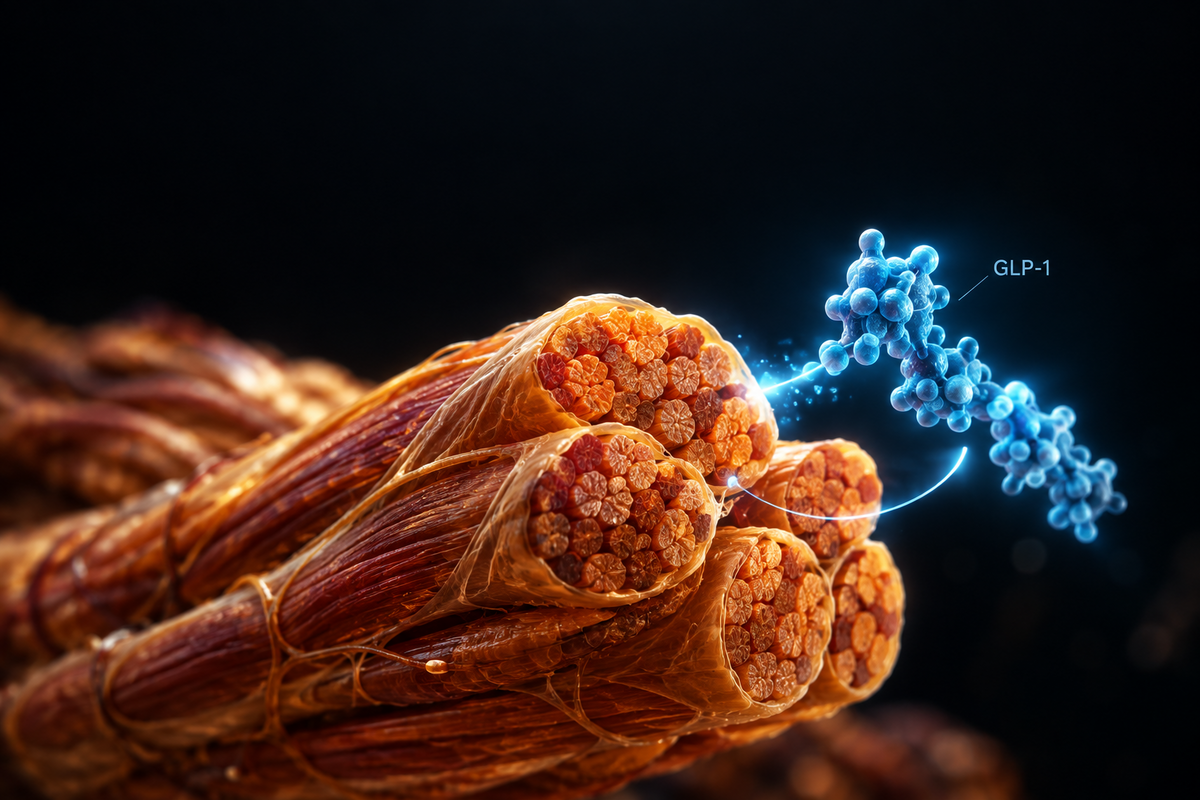
Ozempic, Mounjaro, and retatrutide are producing weight loss that used to require surgery, 15-24% of body weight in trials. What gets less attention is where that weight comes from. A meaningful chunk of it is muscle, not just fat, and the drugs that work best for weight loss tend to be the worst offenders.
What the research actually shows
Start with the scale of the problem. According to PubMed, a 2024 network meta-analysis in Metabolism, pooling 22 randomised trials and 2,258 participants, found GLP-1 receptor agonists reduced lean mass by an average of 0.86kg, roughly 25% of total weight lost, alongside fat mass reductions (Karakasis et al., 2024, DOI). Critically, this wasn't uniform: tirzepatide and semaglutide, the two most effective drugs for weight and fat loss, were also among the least effective at preserving lean mass, while liraglutide was the only agent to achieve significant weight loss without a significant lean mass reduction.
A 2024 review in Diabetes Care puts a sharper number on it: incretin-based therapies cause lean mass loss of roughly 10%, or about 6kg, "comparable to a decade or more of aging" in a matter of months (Locatelli et al., 2024, DOI). That framing is worth sitting with. Muscle loss that would normally take ten years happens over a single course of treatment.
A 2024 review in the same journal found that across weight-loss interventions generally, including these drugs, more than 25% of total weight lost typically comes from fat-free mass, not fat, flagging this as a genuine risk factor for sarcopenic obesity, especially in older adults (Stefanakis et al., 2024, DOI). Newer myostatin-pathway drugs built to counter this are still in development, not available to patients today.
The more encouraging finding: this loss appears mitigable, not inevitable. The same Diabetes Care review found supervised resistance training programs lasting more than 10 weeks produced average lean mass gains of about 3kg and strength gains of roughly 25%, and recommended tailored resistance training as an adjunct to incretin therapy specifically (Locatelli et al., 2024, DOI). This is extrapolated from resistance-training literature generally, not a GLP-1-specific trial, worth being honest about, but the mechanism (mechanical loading signals the body to keep the muscle it's using) doesn't depend on what's causing the deficit.
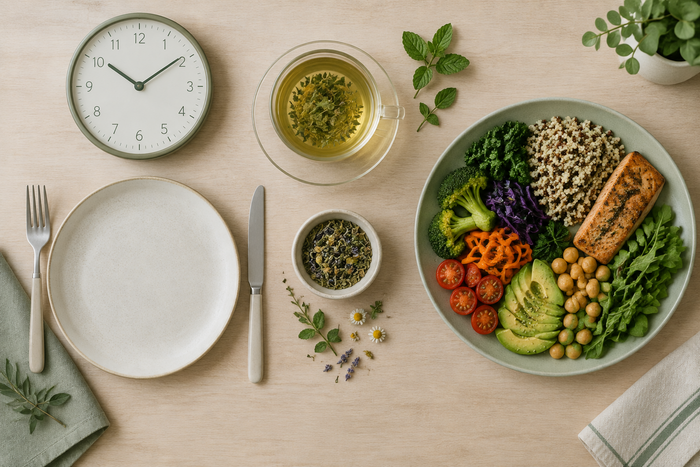
On protein specifically: the International Society of Sports Nutrition's position stand on diet and body composition concludes that higher protein intakes, 2.3 to 3.1g per kilogram of fat-free mass, may be required to maximise muscle retention in a caloric deficit, well above standard recommendations (Aragon et al., 2017, DOI). A 2023 review focused on very-low-calorie diets echoes this: resistance training as the priority, adequate protein as a necessary second lever to limit muscle loss (Janssen et al., 2023, DOI). The practical problem on a GLP-1 drug is appetite suppression itself, these drugs make hitting a high protein target from food alone genuinely difficult, since they're built to reduce how much you want to eat.
That's the gap an amino acid supplement is realistically solving, not a magic anti-catabolic effect, but a low-volume way to add protein when appetite won't allow another full meal. BulkSupplements' Essential Amino Acids powder delivers 10g of the nine essential amino acids per serving in an unflavoured, easy-to-mix format, useful specifically for closing a protein gap that whole food isn't covering on a given day.
What this means for you
If you're on a GLP-1 medication, the muscle-loss risk is real and well-documented, but it isn't a reason to avoid these drugs if they're otherwise right for you. It's a reason to pair them deliberately with resistance training, at least twice weekly, and a protein target well above what you'd casually eat. If your appetite is suppressed enough that hitting that target from meals feels impossible most days, that's exactly the scenario where a convenient EAA or protein supplement earns its place, not as a replacement for real food, but as insurance against the days it genuinely can't get there.
The biotype angle
Ectomorphs starting a GLP-1 medication with less muscle mass to begin with have the smallest buffer before lean-mass loss becomes functionally noticeable, and should prioritise resistance training from day one, not after the fact. Endomorphs, who make up a large share of GLP-1 patients, often see the most dramatic total weight loss and need the clearest reminder that the scale number doesn't distinguish fat loss from muscle loss. Mesomorphs already resistance training before starting the medication have a real advantage, the adaptive response the research points to is easier to maintain than to rebuild from scratch.
The honest verdict
The muscle-loss data on GLP-1 drugs is genuine and shouldn't be downplayed, roughly a quarter of the weight lost on these medications is lean mass, more with the most potent options. The honest caveat: the resistance-training and protein-target evidence backing the fix comes largely from general hypocaloric-diet research, not GLP-1-specific trials, so treat it as the best current extrapolation, not a guarantee. Still, the mechanism holds regardless of what's driving the deficit. Train against resistance, hit your protein number by whatever combination of food and supplementation actually gets you there, and don't assume the drug is doing anything to protect the muscle on its own, because the data says it mostly isn't.
Want a training and nutrition plan that protects muscle while you lose weight, not just a number on the scale?
→ milenium.com.au/pages/biofit-training
References:
1. Karakasis P, Patoulias D, Fragakis N, Mantzoros CS. Effect of glucagon-like peptide-1 receptor agonists and co-agonists on body composition: Systematic review and network meta-analysis. Metabolism. 2024. DOI: 10.1016/j.metabol.2024.156113. PMID: 39719170.
2. Locatelli JC, Costa JG, Haynes A, et al. Incretin-Based Weight Loss Pharmacotherapy: Can Resistance Exercise Optimize Changes in Body Composition? Diabetes Care. 2024. DOI: 10.2337/dci23-0100. PMID: 38687506.
3. Stefanakis K, Kokkorakis M, Mantzoros CS. The impact of weight loss on fat-free mass, muscle, bone and hematopoiesis health. Metabolism. 2024. DOI: 10.1016/j.metabol.2024.156057. PMID: 39481534.
4. Aragon AA, Schoenfeld BJ, Wildman R, et al. International society of sports nutrition position stand: diets and body composition. J Int Soc Sports Nutr. 2017. DOI: 10.1186/s12970-017-0174-y. PMID: 28630601.
5. Janssen TAH, Van Every DW, Phillips SM. The impact and utility of very low-calorie diets: the role of exercise and protein in preserving skeletal muscle mass. Curr Opin Clin Nutr Metab Care. 2023. DOI: 10.1097/MCO.0000000000000980. PMID: 37724991.