The Mind-Gut Connection Review: Science vs. Wellness Hype (2026)
Share
Affiliate disclosure: As an Amazon Associate, I earn from qualifying purchases. I only recommend products with real scientific evidence behind them, and I'm upfront about where the evidence is thin.
Is the gut-brain connection real science, or has it become a wellness buzzword?
I haven't personally read this book cover to cover, so this is my professional assessment as a biotechnologist, evaluating it against the author's own published research record — not a reading diary. That distinction matters more here than usual, because "gut-brain connection" has become one of the most overused phrases in wellness content, often stretched well past what the underlying science actually supports. Emeran Mayer is a different case: he's the executive director of UCLA's Center for Neurobiology of Stress and has decades of NIH-funded research specifically in this field, which is worth weighing before dismissing the topic as hype.
What's actually in it
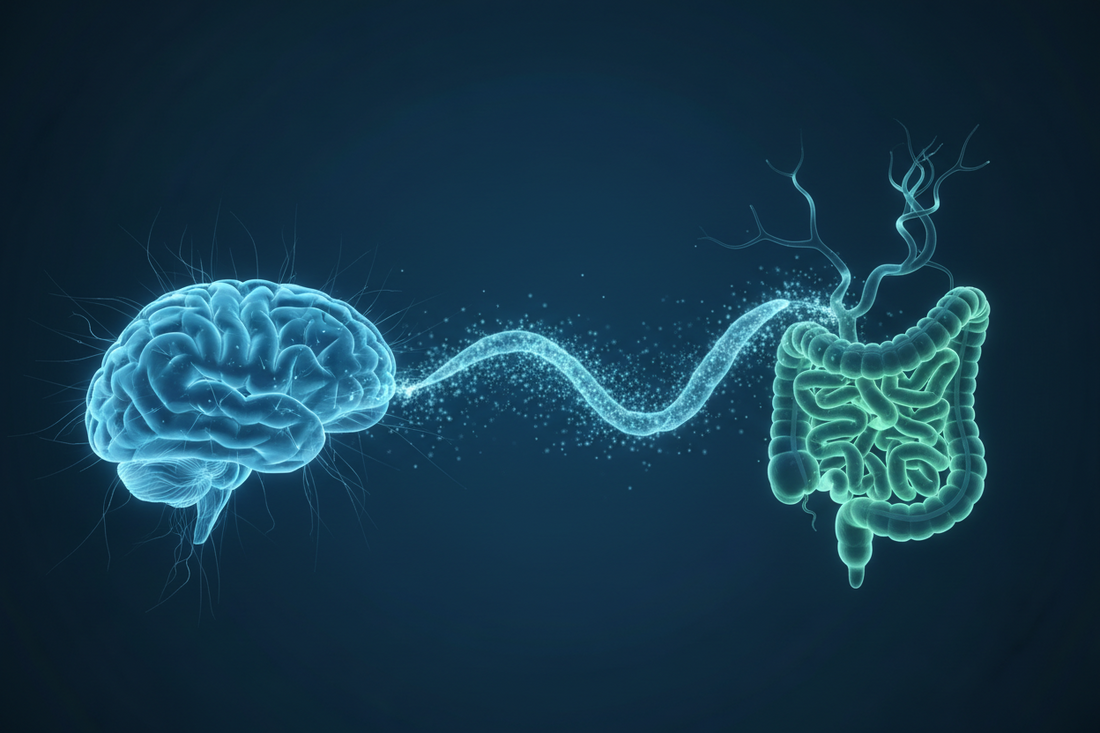
The book is structured across roughly ten chapters covering the biology of brain-gut communication (the vagus nerve, the enteric nervous system sometimes called the "second brain"), the gut microbiome's role in mood and behavior, the effects of stress and diet on gut health, and applications to conditions including irritable bowel syndrome, anxiety, depression, obesity, and autism spectrum disorder. It closes with practical dietary guidance emphasizing fiber, fermented foods, and polyphenols, alongside caution about indiscriminate probiotic and supplement use.
What the research says
Unlike most books in this space, Mayer's central claims are backed by review papers he's personally authored in the peer-reviewed literature. According to PubMed, Mayer co-authored a 2015 review in the Journal of Clinical Investigation establishing that the gut microbiota influences emotional behavior, stress and pain modulation, and brain neurotransmitter systems — largely from germ-free rodent studies, with the explicit caveat that translation to human disease states like irritable bowel syndrome, anxiety, and depression remained an open research question at the time (Mayer et al., Journal of Clinical Investigation, 2015). A follow-up 2018 review extended this into a systems-biology model of bidirectional brain-gut-microbiome communication, again describing the underlying mechanisms as largely established in preclinical models with implications for IBS, obesity, and psychiatric conditions still being worked out clinically (Martin, Osadchiy, Kalani & Mayer, Cellular and Molecular Gastroenterology and Hepatology, 2018).
A third review co-authored by Mayer on gut-brain axis and behavior is unusually candid for a source book: it states plainly that while rodent studies support causation between gut microbiota and behavior, "evidence for an influence of acute gut microbial alterations on human behavioral and clinical parameters is lacking," and that the translational potential of preclinical findings "remains unclear without further clinical investigation" (Martin & Mayer, Nestlé Nutrition Institute Workshop Series, 2017).
How I'd evaluate this as a coach
This is the most useful thing I can tell you about this book: the author's own scientific writing is more cautious about human applicability than most popular science books tend to be, and that caution generally carries through into the book itself — Mayer is explicit that mechanisms are well-established in animal models while human clinical evidence is still developing for specific conditions. That's a genuinely good sign for credibility. Where I'd want a reader to apply their own skepticism is anywhere the book moves from "the gut microbiome plausibly influences X" to specific dietary prescriptions for X — the mechanistic biology is well-supported, but individual-level dietary recommendations for conditions like depression or autism are extrapolating further than the current human RCT evidence base fully supports, even from a well-credentialed source.
Who this is actually worth it for
This suits anyone dealing with digestive symptoms that seem connected to stress or mood — which describes a large share of people with IBS-type symptoms — and anyone wanting a genuinely science-grounded (rather than wellness-influencer) introduction to the gut microbiome's role in the body. It's less useful as a specific treatment protocol for a diagnosed mental health condition; for that, it's a starting point for a conversation with a clinician, not a replacement for one.
The honest verdict
This is one of the more credible entries in the gut-health book category because the author is an actual leading researcher in brain-gut-microbiome science, not someone borrowing the science secondhand — and his own papers show an appropriate level of caution about what's proven versus plausible. The mechanistic biology (vagus nerve signaling, microbiome-neurotransmitter interactions) is well-supported. The clinical and dietary recommendations for specific conditions should be read as reasonable, evidence-informed starting points rather than settled protocols, which is consistent with how Mayer's own peer-reviewed work frames the evidence. Worth reading for the biology; talk to your doctor before treating it as a treatment plan.
→ Check current price on Amazon AU
Download the free Biotype Guide at milenium.com.au
milenium.com.au
References:
1. Mayer EA, Tillisch K, Gupta A. Gut/brain axis and the microbiota. J Clin Invest. 2015. DOI
2. Martin CR, Osadchiy V, Kalani A, Mayer EA. The Brain-Gut-Microbiome Axis. Cell Mol Gastroenterol Hepatol. 2018. DOI
3. Martin CR, Mayer EA. Gut-Brain Axis and Behavior. Nestle Nutr Inst Workshop Ser. 2017. DOI