As an Amazon Associate I earn from qualifying purchases. It doesn't change what I recommend.
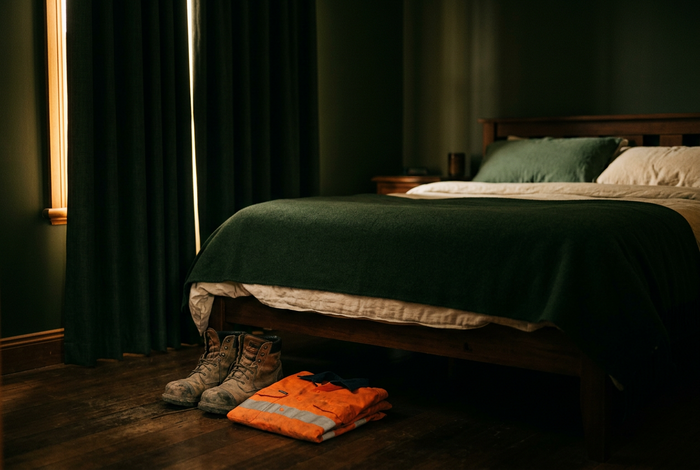
I work 12-hour rotating shifts in Sydney, and the hardest day sleep of the year isn't in winter. It's the first run of nights when the forecast says 30°C and the sun is hitting the bedroom window by 9am.
How to sleep in the day when it's hot: the short answer
Keep the heat out before it gets in, not after. Close the blinds and curtains on the sunny side before you leave for your shift, cool the room before you lie down, and sleep under less, not more. Heat mostly costs you deep sleep and wakes you up more often, so the goal is a cooler room and a body that can shed heat easily.
Why hot day sleep falls apart
After a night shift you're already trying to sleep at the wrong time on your body clock. Your core temperature is starting its daytime rise just as you get into bed. Then the room warms up through the morning, peaking right in the second half of your sleep. That's usually when you wake at 11am or midday, sweaty, and can't get back down.
It isn't a willpower problem. It's a heat problem stacked on a body-clock problem, and only one of those you can fix today.
What the research says
1. Heat costs you deep sleep and REM
A review by Okamoto-Mizuno and Mizuno (2012) pulled together the sleep-lab work on temperature. In real-life conditions, with bedding and clothes on, heat exposure increased time awake and reduced both slow-wave (deep) sleep and REM sleep. Humid heat was worse again, because sweat can't evaporate to cool you. That matches what most of us notice on a sticky Sydney day: you're not just sleeping less, you're sleeping lighter.
2. The drop between 25°C and 30°C is measurable
Baniassadi and colleagues (2023) tracked older adults in their own homes with wearable sleep monitors and bedroom temperature sensors. Sleep was most efficient when the bedroom sat between 20 and 25°C. As it climbed from 25 to 30°C, sleep efficiency dropped by about 5–10%. That's a lot of broken sleep when you only have a six-hour window to begin with.
The Sleep Health Foundation goes cooler still, recommending a "comfortably cool" 16–20°C room with good ventilation, plus darkness and quiet for shift workers.
3. A warm shower can help, if the timing is right
This one surprises people. A meta-analysis by Haghayegh and colleagues (2019) found that a warm shower or bath at 40–42.5°C, taken 1–2 hours before bed for as little as 10 minutes, helped people fall asleep faster and rate their sleep better. The warm water pushes blood to your hands and feet, and your body then dumps heat through them, so your core temperature drops. That drop is part of the signal to sleep.
Limits of the evidence
None of these studies were done on night-shift workers sleeping in the day. The temperature study followed older adults at night, and the shower studies tested normal bedtimes, not 8am after a 12-hour shift. Most of the evidence is small or observational. So these are sensible, low-risk steps built on how body temperature and sleep work, not a guarantee of an extra hour.
My 5-step routine for hot day sleep after nights
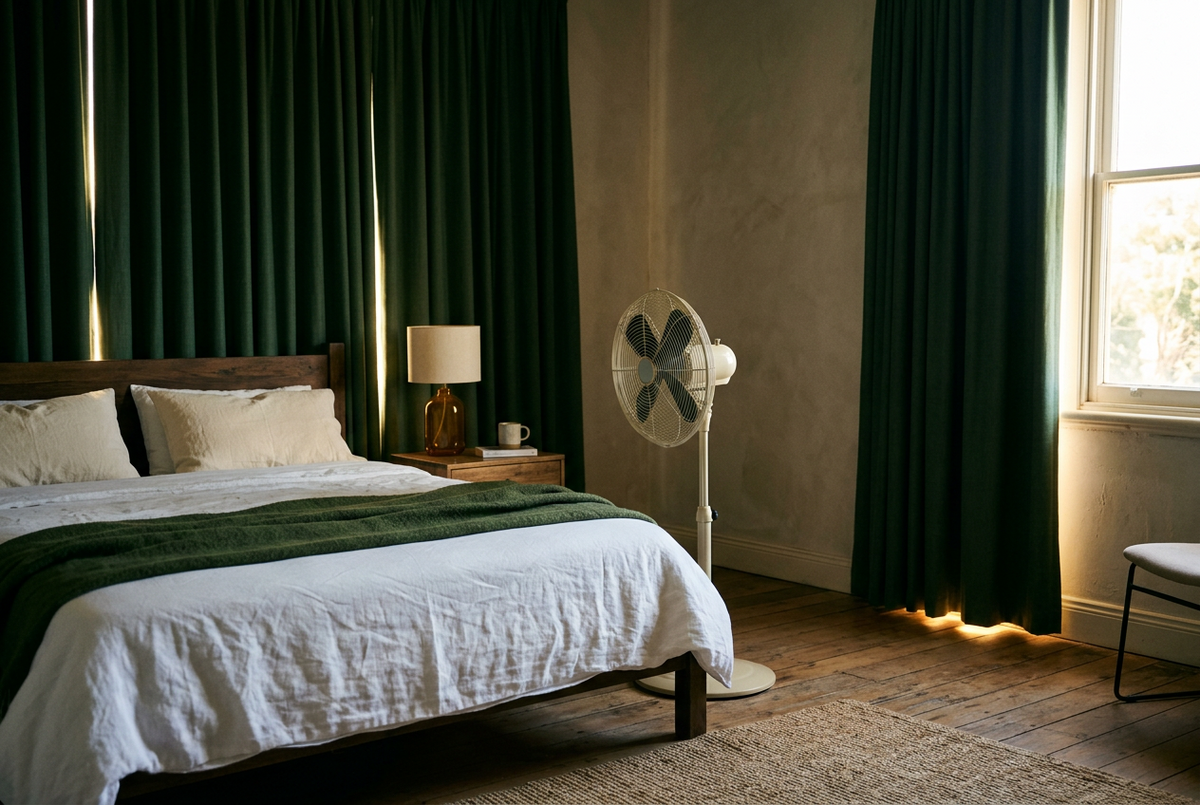
- Block the sun before you leave for work. Close the blinds and curtains on the east and north side the evening before, not when you get home. Once the morning sun has heated the glass, the room is already warming. Thermal blackout curtains do two jobs at once: dark and cooler.
- Pre-cool the room. If you have air-con, set a timer so the room is cool when you walk in. If you don't, a quiet pedestal fan pointed across the bed helps sweat evaporate, and doubles as steady background noise. A cheap room thermometer tells you whether the room is really 24°C or 29°C.
- Time the shower. If you'll be up for an hour after you get home, have a warm shower early in that hour. If you're going straight to bed, a lukewarm shower to rinse off the sweat is fine. Cool showers haven't been tested in the same way, so go with what feels comfortable, not freezing.
- Sleep under less. Swap the doona for a single sheet and use light cotton or linen sheets. Bedding is what traps the heat in those lab studies.
- Drink before bed, not during. Have a glass of water when you get home so you're not waking up dry, but don't sink a litre and wake at 11am for the toilet. I went through what I drink across a 12-hour shift in Dehydrated on a 12-Hour Shift? What a Biotechnologist Drinks (and Skips).
Your one action this week
Before your next night shift, close the curtains on the sunny side of your bedroom and set the fan or air-con timer for 30 minutes before you get home. It takes two minutes, and it's the step most of us skip.
Know the heat warning signs
If you wake up confused, very hot and dry, with a racing pulse, vomiting or slurred speech, that can be heatstroke, which is a medical emergency. Call 000. Healthdirect has a plain-English heatwave guide, and you can call healthdirect on 1800 022 222 for advice any time. If poor sleep keeps going despite a good setup, talk to your GP. This article is general information, not medical advice.
If you nap before your next shift, the same rules apply: dark, quiet and cool. I covered the timing in Pre-Shift Nap Before Night Shift: How Long, and When?
Train around the roster, not against it
Sleep is the first thing a hot run of nights takes from you. Training is usually the second. My free 7-day BioFit Starter week is built for weeks like this: three 25-minute sessions, two walks and two rest days in the BioFit app, and you choose which days they land on. It logs every set and weight, so you can see last session next to today's. There's no card and nothing renews. If you join coaching after that, you can also ask for your plan as a follow-along video: press play and follow.
Quick answers
What temperature should my bedroom be for day sleep?
Cooler than most bedrooms get in summer. The Sleep Health Foundation suggests 16–20°C with good airflow. In one home study, sleep was most efficient between 20 and 25°C and got worse as the room passed 25°C.
Is it OK to sleep with a fan on?
For most healthy adults, yes. A fan helps sweat evaporate and masks daytime noise. Healthdirect lists fans as a way to keep cool. In extreme heat, also drink water, use a cool room if you can, and watch for signs of heat illness.
Why can't I sleep in the day after night shift?
Your body clock is pushing you awake during the day, and daytime light, noise and heat add to it. A dark, quiet, cool room and a consistent bedtime after each shift help. See your GP if it keeps going.
Sources
- Okamoto-Mizuno K, Mizuno K. Effects of thermal environment on sleep and circadian rhythm. J Physiol Anthropol. 2012;31(1):14. doi:10.1186/1880-6805-31-14 · PMID 22738673
- Baniassadi A, Manor B, Yu W, Travison T, Lipsitz L. Nighttime ambient temperature and sleep in community-dwelling older adults. Sci Total Environ. 2023;899:165623. doi:10.1016/j.scitotenv.2023.165623 · PMID 37474050
- Haghayegh S, Khoshnevis S, Smolensky MH, Diller KR, Castriotta RJ. Before-bedtime passive body heating by warm shower or bath to improve sleep: a systematic review and meta-analysis. Sleep Med Rev. 2019;46:124–135. doi:10.1016/j.smrv.2019.04.008 · PMID 31102877
- Sleep Health Foundation. Healthy sleep practices for shift workers. sleephealthfoundation.org.au
- Healthdirect Australia. How to take care of yourself in a heatwave. healthdirect.gov.au