
Ninety-seven percent of Australian men do not eat enough fibre. I was one of them for most of my twenties, even training as a professional athlete. I thought I was eating well. High protein, decent carbohydrates, plenty of food. But my gut was telling a different story — bloating, irregular digestion, energy crashes mid-afternoon that had nothing to do with training load. It took getting a genetics degree and starting to brew my own probiotic drinks to finally understand why.
Now there is a global trend called fibermaxxing taking over TikTok and Instagram. And as a biotechnologist, I want to cut through the noise and tell you what is actually worth paying attention to.
What Fibermaxxing Actually Is (And Why It Matters)
Fibermaxxing is exactly what it sounds like: a deliberate strategy to maximise your daily dietary fibre intake. It surged in popularity in late 2025 and has been gaining serious momentum in early 2026. The trend is being driven by biohackers, dietitians, and everyday people finally realising that most of us are operating at roughly 15 grams of fibre per day — well below the recommended 25 grams for women and 38 grams for men.
The science underneath this trend is solid. Dietary fibre acts as a prebiotic — it feeds the bacteria living in your gut. Those bacteria ferment fibre and produce short-chain fatty acids including butyrate, propionate, and acetate. A 2025 review in the journal Nature Reviews Gastroenterology and Hepatology found that these bacterial metabolites connect nutrition, microbiome function, and systemic human health across immunity, cognition, inflammation, and metabolic regulation. Butyrate specifically maintains the integrity of your gut lining, reducing the permeability that drives low-grade chronic inflammation — what researchers now link to everything from fatigue and mood disorders to insulin resistance.
PepsiCo CEO Ramon Laguarta put it bluntly in October 2025, telling analysts that fibre will be the next protein. Whole Foods named fibre one of its top food trends for 2026. This is not a flash-in-the-pan social media moment. It reflects a real shift in understanding of what drives long-term health.
Practical takeaway: Getting your fibre intake up from 15 grams to 25 or 30 grams a day is one of the most impactful nutritional changes most people can make. Full stop.
Where Fibermaxxing Goes Wrong
Here is where I need to be honest with you, because not everything viral is correct.
The trend’s biggest flaw is that it focuses on quantity over diversity. Research is now pointing clearly in a different direction. A 2026 Mintel Global Food and Drink report found that expert consensus is moving toward fibre diversity — consuming different types of fibre from multiple plant sources — rather than simply eating as much fibre as possible from one or two foods. Cailin Hall, head of research at prebiotic fibre brand Myota, described it well when she told NutraIngredients that the next phase needs to be about smart fibermaxxing: consuming a diversity of plant-based prebiotic fibres based on science, not social media.
Different fibres feed different bacterial species. Psyllium, inulin, resistant starch, pectin, beta-glucan — each one selects for different microbiota. A diverse gut microbiome consistently correlates with better health outcomes than any single high-fibre food at high quantity. If you are eating the same overnight oats and chia pudding every single day, you are maximising fibre from a narrow source and likely reinforcing a limited range of bacterial species.
The second problem is going too hard too fast. Your gut bacteria need time to adapt. Jumping from 15 grams to 50 grams of fibre in a week causes bloating, cramping, and gas that makes people abandon the whole effort inside of three days. That is not a fibre problem. That is an impatience problem.
Practical takeaway: Aim for 30-plus grams daily from at least five to seven different plant sources. Increase gradually — add roughly five grams per week. And rotate your sources.
The Probiotic Connection Most People Miss
Here is what the fibermaxxing conversation almost never mentions: fibre without sufficient live bacteria to ferment it is only half the equation.
A February 2026 study from the University of Nottingham found that pairing fermented kefir with a diverse prebiotic fibre mix delivered a powerful anti-inflammatory effect — more than either intervention alone. This is what scientists call a synbiotic approach — prebiotics and probiotics working together. The prebiotic fibre is the food. The live probiotic bacteria are the workers. You need both.
As someone who is lactose intolerant and allergic to casein, kefir has never been an option for me. It is why I built Vitality Coffee and the other Milenium drinks the way I did — genuinely functional live probiotics in a format that is dairy-free and low sugar. Every morning, before I eat anything else, I drink Vitality Coffee. It seeds my gut with live cultures, then everything I eat throughout the day — the fibre, the vegetables, the variety of plant foods — has bacteria ready to ferment it. That is the full system. Check it out at milenium.com.au/shop.
Practical takeaway: Pair your fibre strategy with live probiotics. Do not just feed the garden. Make sure the garden has something living in it first.
My Practical Fibermaxxing Protocol
I do not follow social media protocols. I follow what the research and my own body tell me.
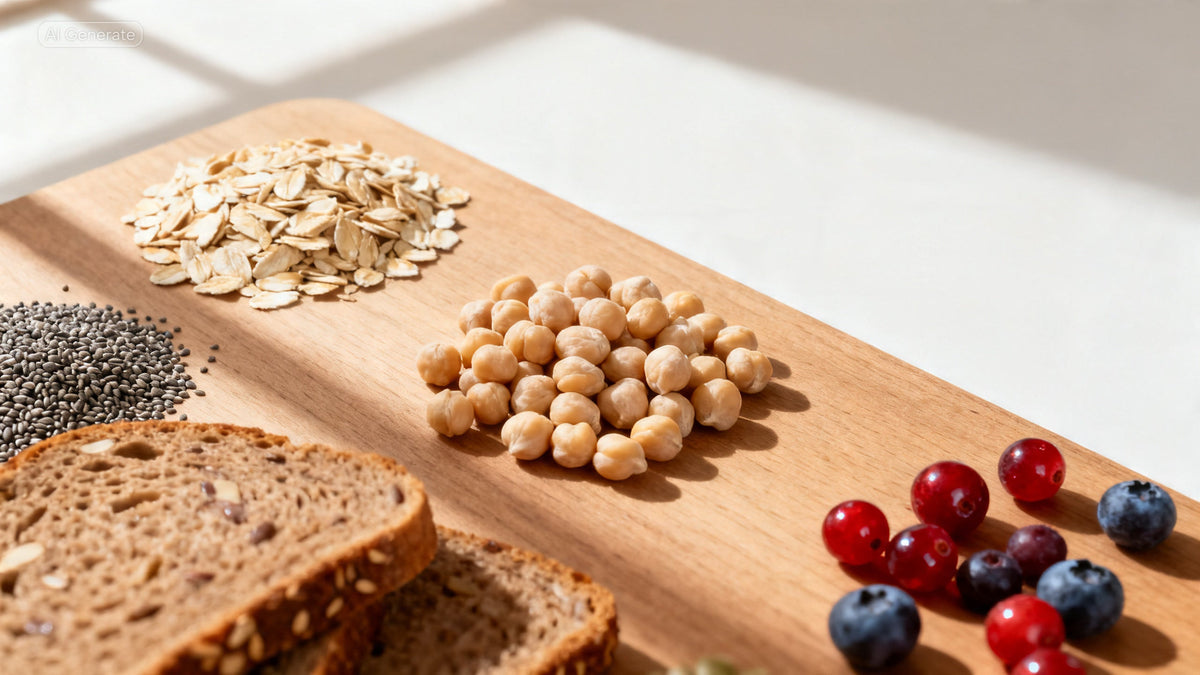
Morning: Vitality Coffee with live probiotics. Rolled oats cooked with chia seeds, topped with berries and a tablespoon of flaxseed. That alone is roughly 12 to 14 grams of fibre from three different sources.
Lunch: A large salad based on at least four different vegetables, including at least one legume — chickpeas, lentils, black beans. Legumes are the single most underused fibre source in Australian diets. They also feed some of the most beneficial bacterial species. Add roughly eight to ten grams of fibre.
Dinner: Some form of whole grain alongside whatever protein I am eating. Brown rice, quinoa, barley. Another six to eight grams. Total for the day is usually in the 30 to 35 gram range from seven or eight different plant sources.
This does not require supplements. It does not require tracking apps. It requires intention and variety.
One thing worth monitoring: if you have been low-fibre for years and you push up quickly, track your digestion for the first two weeks. Mild increase in gas is normal and temporary. Significant cramping or bloating means pull back and go slower.
For more detailed guidance on building a gut health protocol — including the research behind what I eat and why — head to the milenium.com.au/blogs/wellness-library.