Affiliate disclosure: As an Amazon Associate, I earn from qualifying purchases. I only recommend products with real scientific evidence behind them, and I'm upfront about where the evidence is thin.
Electrolytes for everyday life, not just athletes
Electrolyte drinks get marketed almost entirely to people training hard. But the evidence for electrolyte replacement is just as relevant to someone who skipped a meal, caught a stomach bug, flew long-haul, or spent an afternoon in the heat without training at all. This is the everyday case, not the sports-performance one.
What the research actually shows
Start with how "mild" dehydration actually is in practice. A 2011 study in the British Journal of Nutrition tested 26 men at an average of just 1.59% body mass water loss, easily reached over a normal warm day with inadequate fluid intake, no exercise required, and found measurable impairment in short-term memory, mood, and vigilance (Ganio et al., 2011). A companion study in women found the same mild dehydration level produced more headaches, fatigue, and a subjective sense that ordinary tasks felt harder. This is the level of dehydration most people walk around with occasionally without noticing, not an extreme athletic scenario.
On what actually rehydrates you fastest: a 2016 randomised trial in the American Journal of Clinical Nutrition, testing beverages in 72 healthy men, developed a beverage hydration index using plain water as the baseline (1.0). An oral rehydration solution scored 1.50, meaning it produced significantly better fluid retention than plain water, with lower urine output over the same period (Maughan et al., 2016). Milk scored similarly well. Plain water, counterintuitively, isn't always the most efficient rehydration choice, sodium content in the beverage affects how much of what you drink your body actually retains versus excretes.
The stakes are highest at the other end of life. A 2015 UK study followed 200 hospitalised adults aged 65 and over and found 37% were dehydrated on admission, rising to 61% still dehydrated at 48 hours. Dehydrated patients were six times more likely to die in hospital, independent of age, illness severity, and existing conditions, and only 8% of dehydrated patients had been clinically identified as such by the treating team (El-Sharkawy et al., 2015). Electrolyte status in older adults is a genuinely underappreciated risk factor, not a minor comfort issue.
What this means for you
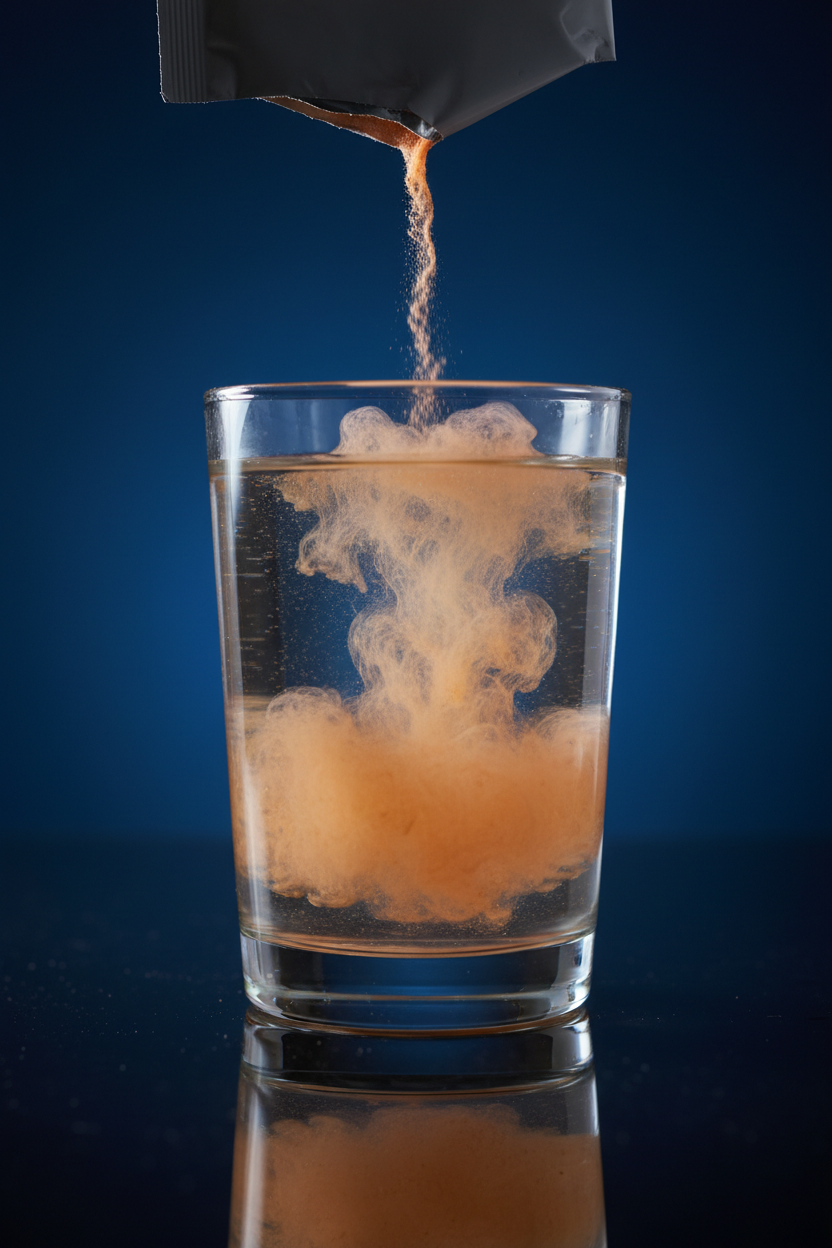
You don't need a sports electrolyte product for a normal day. But there are specific everyday situations where sodium-containing rehydration outperforms water alone: recovering from a stomach bug, a long-haul flight, a hot day with poor fluid intake, or for older adults generally, where the dehydration risk is measurably higher and harder to self-detect. Hydralyte electrolyte powder sachets are formulated closer to a clinical oral rehydration solution than a sports drink, lower sugar, calibrated sodium, designed for actual rehydration rather than mid-workout fuelling. That's a meaningfully different product category from a sports drink, even though they sit near each other on the shelf.
The biotype angle
This applies fairly evenly across biotypes since it's not a training-adaptation question, it's a baseline physiology one. Where it does diverge: endomorphs and anyone managing blood pressure should be more deliberate about total sodium intake across the day rather than defaulting to electrolyte drinks routinely, the everyday case here is occasional and situational, not a daily habit. Ectomorphs who tend to undereat and under-drink on busy days are, in my experience coaching, the group most likely to be mildly dehydrated without realising it.
The honest verdict
Worth having on hand for the specific situations above, illness, travel, heat exposure, not worth drinking daily as a default replacement for water. The real limitation: for a healthy adult eating a normal diet on an ordinary day, plain water plus normal food sodium intake is entirely adequate, this isn't a product you need constantly. Hydralyte's electrolyte powder earns a spot in the cupboard for the days that actually call for it, not a spot in your daily routine.
For the athlete-specific sodium question: → Do Active People Really Need 3x the Sodium? What the 2025 Review Found
Want a nutrition approach built around your actual biotype and daily needs, not generic hydration advice?
→ Get the free Biotype Guide
References:
1. Ganio MS, Armstrong LE, Casa DJ, et al. Mild dehydration impairs cognitive performance and mood of men. Br J Nutr. 2011. PMID: 21736786.
2. Maughan RJ, Watson P, Cordery PA, et al. A randomized trial to assess the potential of different beverages to affect hydration status: development of a beverage hydration index. Am J Clin Nutr. 2016. PMID: 26702122.
3. El-Sharkawy AM, Watson P, Neal KR, et al. Hydration and outcome in older patients admitted to hospital (The HOOP prospective cohort study). Age Ageing. 2015. DOI: 10.1093/ageing/afv119. PMID: 26316508.