By Hugo Novais, biotechnologist, former pro swimmer, CrossFit coach and a rotating 12-hour shift worker myself.
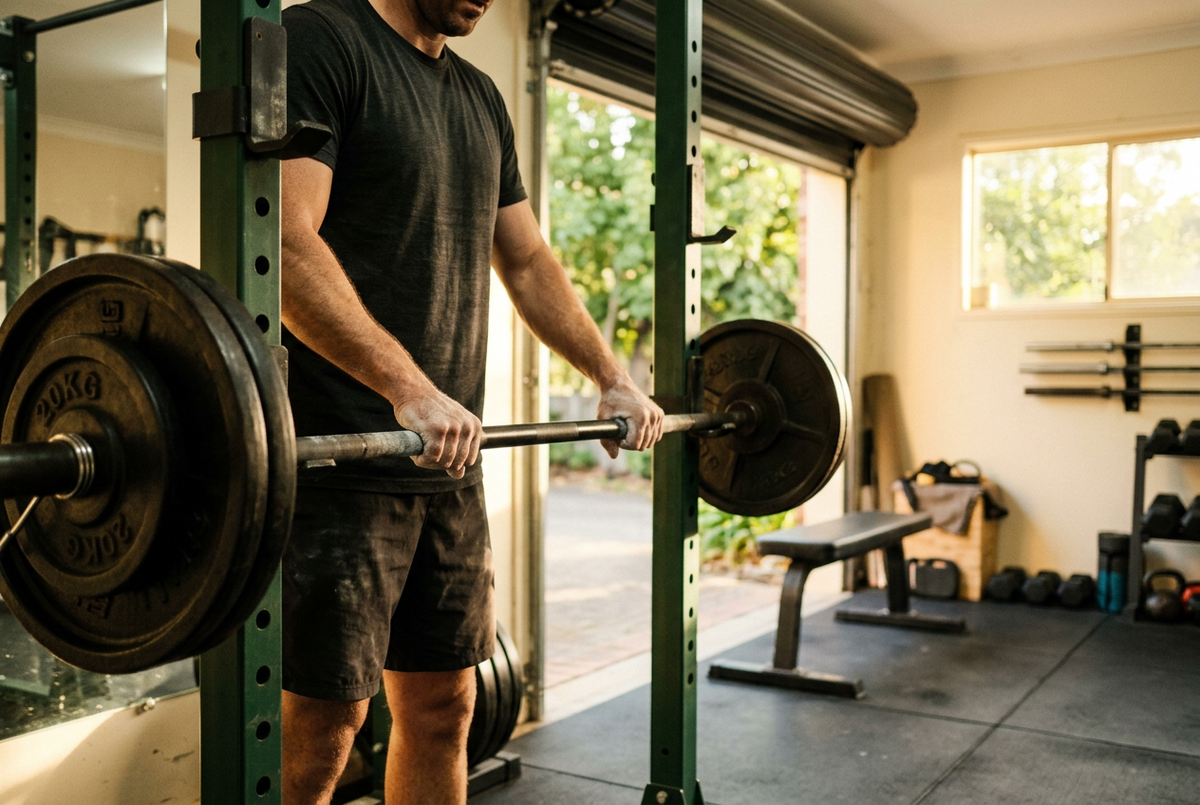
The gym is empty at 7:30 a.m. after a night shift. No queue for the rack, no one on the bench. It's tempting. But if you've ever tried to squat after twelve hours awake, you know the bar feels heavier and your back feels less sure of itself. That's not in your head. Here's what the research says, and the simple timing rule I use on my own roster.
Sleep loss makes you weaker, and it gets worse the longer you're awake
A 2022 meta-analysis pooled the studies that tested exercise performance after acute sleep loss. On average, performance dropped by about 7.6%. Two details matter for shift workers. First, the drop grew by roughly 0.4% for every extra hour people had been awake before exercising. Second, sessions done soon after waking were largely unaffected, while sessions later in a long stretch of being awake suffered most (Craven et al., 2022).
After a 12-hour night shift plus the commute, most people have been awake for 14 to 16 hours. That's the worst possible time on that curve.
Sleep loss also slows muscle building
In an Australian study, one night without sleep cut the rate of muscle protein synthesis the next day by 18%, raised cortisol by 21% and lowered testosterone by 24% (Lamon et al., 2021). Your muscles are effectively in a more "breakdown" mood after a sleepless night.
But here's the encouraging part. In another Australian study, young men who slept only four hours a night for five nights had lower muscle-building rates than men who slept normally, unless they also did three high-intensity interval sessions that week. The exercise group kept their muscle-building rate at normal levels (Saner et al., 2020).
So training on a roster isn't pointless. It's one of the main things that protects your muscle when sleep is short. The question is when, not whether.
The rule: train after your main sleep, not before it
For a day worker, the best time to train is any time they've slept. For a night worker, "after you've slept" means the afternoon, after your day-sleep and before your next shift. Here's how I set it up on a 7 p.m. to 7 a.m. night block:
- 2:30 p.m. wake, eat a protein-rich meal
- 3:30 p.m. train (40 minutes of strength work is plenty)
- 5:00 p.m. big pre-shift meal with 30–40 g of protein
- 7:00 p.m. start work
On day blocks, train on days off, or after work early in the block rather than at the end of it. And if the only window you have is straight after a night shift, keep it short and technical: no max attempts, no new exercises, and never drive home from the gym if you're fighting sleep.
Feed the session properly
Timing your training is half the job. The other half is protein spread across the hours you're awake. A review of the per-meal research suggests about 0.4 g of protein per kg of body weight per meal, across at least four meals, which lands you near 1.6 g/kg per day (Schoenfeld & Aragon, 2018). For a 75 kg person, that's four feeds of about 30 g.
Shift workers usually fall short in the same places: the middle of the night shift (vending machine food) and the first day off (sleeping through breakfast). Fix those two and most people hit their numbers.
What to do this week
- Look at your next roster and move at least one session to the afternoon after a day-sleep.
- Eat a 30 g protein meal before every shift.
- Write down one lift's numbers through a night block. Holding them steady is a win.
The full plan
I've put the whole system, including protein targets for every shift type, two 40-minute workouts that fit a 12-hour roster, an honest chapter on creatine and a 28-day plan with 12 high-protein recipes, into a short book: Protein and Creatine for Shift Workers, Book 2 of my BioFit Blueprint Series. It's on Amazon Kindle now, and free with Kindle Unlimited: get Protein and Creatine for Shift Workers on Amazon.
And if you'd like your protein targets and training built around your roster and body, that's what the BioType Nutrition Blueprint and BioFit Coaching are for. Your first consultation is free: book it here.
This article is general education, not medical advice. Talk to your doctor before starting a new exercise program if you have a medical condition or injury.