
Gut-Healing Foods: What the 2025 Clinical Guidelines Actually Support
Share
YouTube is full of "gut healing food" lists right now. Most of them mix genuine evidence with wishful thinking. Here's what's actually been through a clinical guideline process.
In 2025, the British Dietetic Association did something almost nobody else has done properly — they built the first comprehensive, evidence-based dietary guidelines for chronic constipation, grading every single recommendation using the GRADE system. That's not influencer content. That's 75 RCTs put through a formal Delphi consensus process. I'm using that as my anchor here, not Instagram claims.
What the research actually shows
The 2025 guideline development by Dimidi et al., published in the Journal of Human Nutrition and Dietetics, pooled four separate systematic reviews and meta-analyses covering 75 RCTs. Fifty-nine dietary recommendation statements came out of that process. The foods with strong, specific evidence: kiwifruit (three separate recommendation statements), prunes (two statements), and rye bread (two statements). Fibre supplementation had 15 supporting statements. Twenty-seven of the fifty-nine total recommendations were graded as strong — the rest were qualified, meaning the evidence exists but isn't yet definitive.
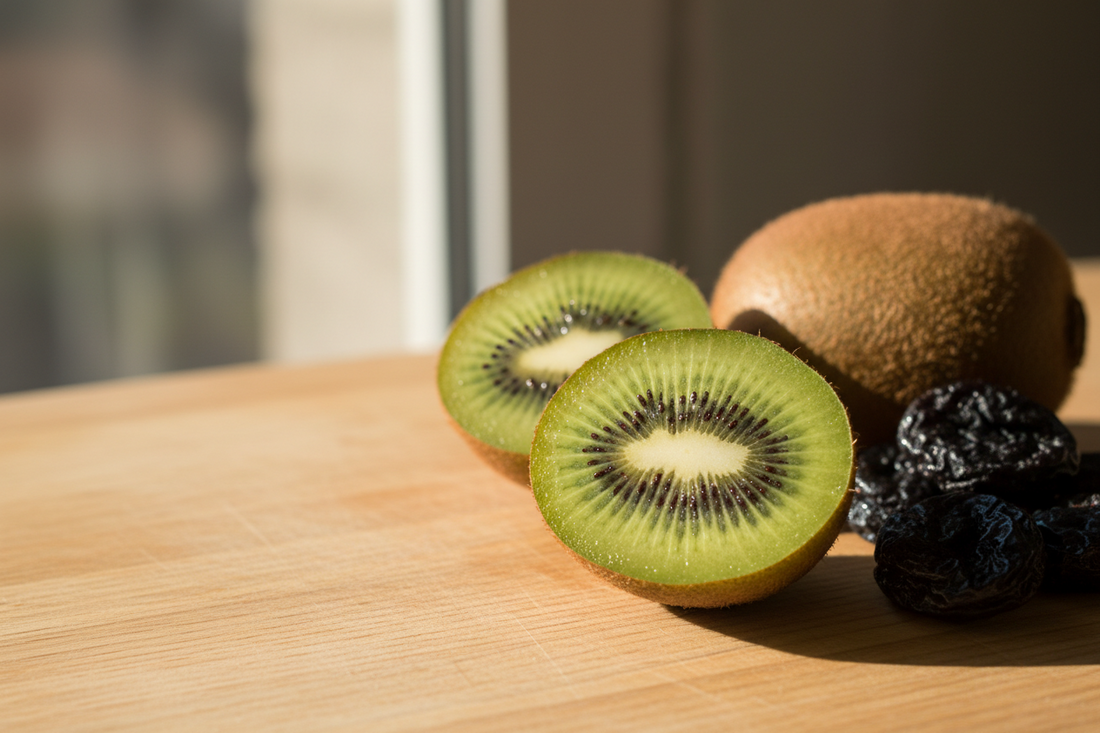
Kiwifruit deserves the spotlight it's getting on YouTube right now. It's not folklore — it's one of the only whole foods with enough trial-level evidence to earn its own dedicated guideline statements. The actin protease enzyme in kiwifruit and its unique fibre matrix (soluble and insoluble combined) appear to have effects beyond what fibre content alone would predict.
On nuts specifically — the trending "best nut for gut health" angle — a 2022 randomized controlled trial by Rinott et al. published in Genome Medicine as part of the DIRECT-PLUS study tested a Mediterranean diet supplemented with 28g/day of walnuts against standard dietary guidance in 294 participants with abdominal obesity. The walnut-supplemented Mediterranean diet groups showed substantial changes in gut microbiome community structure, with enrichment of beneficial bacterial genera and measurable shifts that were directly linked to improvements in body weight and cardiometabolic risk markers. This wasn't walnuts in isolation — it was walnuts inside a broader dietary pattern — but the microbiome shift was real and measured, not assumed.
What this means for you
If chronic constipation or sluggish digestion is your issue, the evidence points to specific, testable interventions rather than a vague "eat more fibre" instruction. Two kiwifruit per day, prunes, or rye bread all have guideline-level backing. Try one consistently for 2–3 weeks before concluding it doesn't work — most of the RCTs behind these recommendations ran for at least that long.
For gut microbiome diversity more broadly — not just constipation, but the wider gut health goal everyone's chasing — the walnut data suggests 28g per day (roughly a small handful) as part of a plant-forward, reduced-meat eating pattern is where the evidence currently sits. Nuts alone in an otherwise poor diet won't replicate the DIRECT-PLUS findings; the dietary context mattered in that trial.
What the guideline explicitly does NOT support: whole-diet approaches marketed as gut-healing protocols. The BDA guideline authors were clear that there wasn't enough evidence to recommend any specific whole-diet approach for constipation — only specific foods, fibre types, and supplements with individual trial support. If a video promises a comprehensive gut reset diet, that claim is running ahead of what the actual guideline evidence supports.
The biotype angle
Ectomorphs typically need higher total fibre density relative to their smaller meal volumes — concentrated sources like kiwifruit and prunes are efficient without requiring large food volumes that ectomorphs often struggle to eat consistently.
Endomorphs benefit most from the anti-inflammatory variety angle — walnuts, in particular, bring omega-3 fatty acids alongside the fibre and microbiome effects, which is relevant given endomorphs' typically higher baseline inflammatory load from adipose tissue.
Mesomorphs in high training volumes have elevated gut transit demands from exercise-induced changes in blood flow distribution. Rye bread's slower-digesting complex carbohydrate profile, paired with its fibre content, suits the sustained energy needs of this biotype better than simple sources.
Download the free Biotype Guide at milenium.com.au
→ milenium.com.au
References:
1. Dimidi E et al. British Dietetic Association Guidelines for the Dietary Management of Chronic Constipation in Adults. Journal of Human Nutrition and Dietetics, 2025. DOI: 10.1111/jhn.70133
2. Rinott E et al. The effects of the Green-Mediterranean diet on cardiometabolic health are linked to gut microbiome modifications. Genome Medicine, 2022. DOI: 10.1186/s13073-022-01015-z