
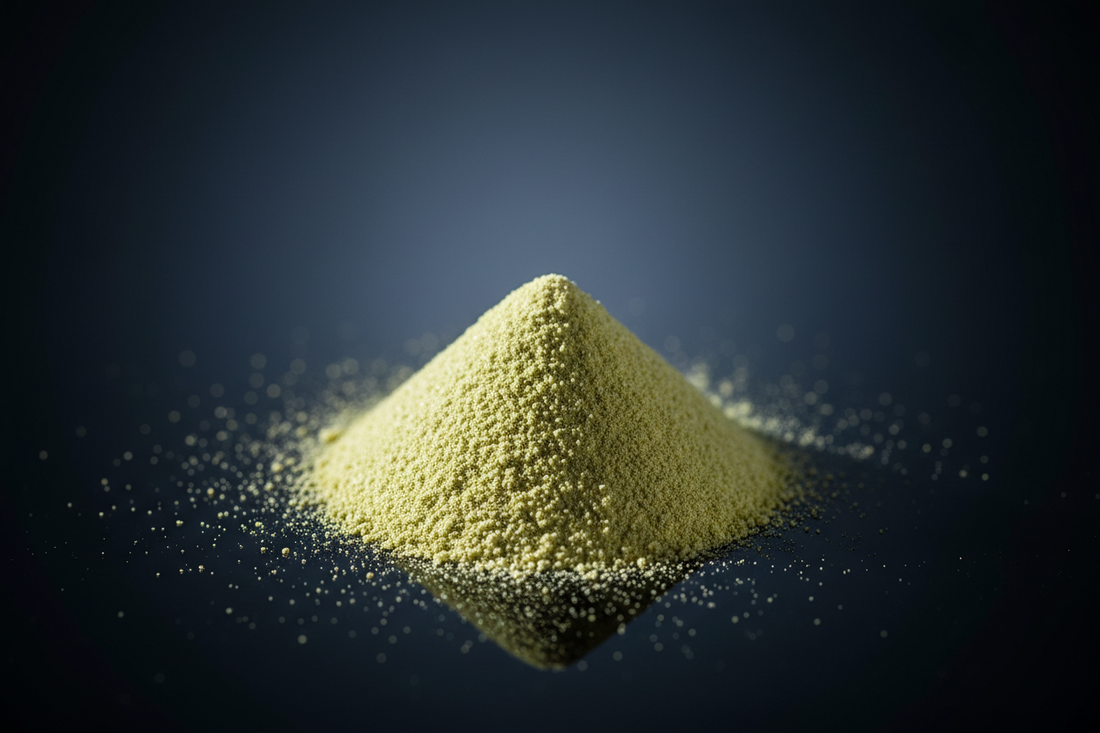
Fermented Plant Protein vs Regular: What the Digestibility Science Shows
Share
I don't touch whey. Casein and lactose intolerance ruled that out for me years ago. So when I evaluate plant protein, I'm not doing it as a marketing exercise — I'm doing it because it's the only category I can actually use.
Plant protein has a reputation problem in the fitness world: "incomplete," "poorly absorbed," "not as good as whey." Some of that reputation is outdated. Some of it is still true, depending on the specific protein source and how it's processed. Let's separate the two with actual digestibility data.
What the research actually shows
Protein quality isn't just about total protein content — it's about how much of it your body can actually absorb and use, measured by the Digestible Indispensable Amino Acid Score (DIAAS). A DIAAS of 100 or above is considered "excellent" quality. Below 75 is considered lower quality.
A 2022 randomized controlled trial by Guillin et al. published in the American Journal of Clinical Nutrition directly measured real ileal amino acid digestibility of pea protein isolate against milk casein in 15 healthy human volunteers — using naso-ileal tubes to sample digestion at the actual site of absorption, not just estimate it. The results were closer than the plant-protein-skeptic narrative suggests: real ileal amino acid digestibility was 93.6% for pea protein versus 96.8% for casein — a real but modest difference, not statistically significant. Net postprandial protein utilisation was virtually identical: 71.6% for pea versus 71.2% for casein. The DIAAS score for standard pea protein isolate came out to 1.00 (100) — officially "excellent" quality, though casein scored higher at 1.45.
A 2023 study by Bailey et al. published in the Journal of the Science of Food and Agriculture found that processing method changes everything. Standard pea protein concentrate and brown rice protein concentrate both scored DIAAS below 75 — "lower quality" by the classification system. But heat-treated rapeseed protein isolate achieved DIAAS scores comparable to whey protein isolate, both qualifying as "excellent." The takeaway: how a plant protein is processed — heat treatment, fermentation, sprouting — measurably changes its digestibility and amino acid availability. Not all pea protein powders are created equal, even from the same base ingredient.
This is exactly where fermentation earns its place. Fermentation partially breaks down complex plant proteins and reduces anti-nutritional compounds like phytic acid and certain oligosaccharides — the same oligosaccharides responsible for the digestive discomfort some people associate with legume-based proteins. A 2017 comparative study by Mathai et al. in the British Journal of Nutrition confirmed that standard pea protein concentrate scored meaningfully lower than dairy proteins on DIAAS — reinforcing that base plant protein, unprocessed, does carry a real digestibility gap. Fermentation and sprouting are specifically the interventions that close that gap.
What this means for you
If you're dairy-free by necessity or choice, don't assume all plant proteins are equal just because the label says "pea protein" or "rice protein." Look for: fermented or sprouted processing (specifically named on the label, not just implied), a protein blend rather than a single source (pea plus rice complements each other's amino acid gaps — pea is lower in methionine, rice is lower in lysine, together they cover both), and Low FODMAP certification if digestive comfort is a concern, since fermentation directly reduces the fermentable oligosaccharide content that causes bloating in some people.
The digestibility gap between standard plant protein and dairy protein is real but smaller than the fitness industry often implies — roughly 3 percentage points in ileal digestibility per the Guillin trial, not the dramatic gap some marketing suggests. With the right processing, well-formulated plant protein isolates can reach DIAAS scores in the "excellent" category, on par with whey.
The biotype angle
Ectomorphs relying on plant protein as a primary source need to pay closer attention to total daily intake, since even a modest digestibility gap compounds when total protein targets are already hard to hit. A fermented, blended plant protein closes most of that gap; an unfermented single-source one widens it.
Endomorphs with dairy sensitivity often see improved digestive comfort switching to a Low FODMAP, fermented plant protein — bloating and digestive distress can otherwise mask genuine progress on body composition goals.
Mesomorphs with high protein targets from heavy training loads should prioritise DIAAS-verified or clearly fermented/sprouted products specifically, since the absolute grams of usable protein matter more at higher intake volumes — a small percentage digestibility gap becomes a larger absolute gap as total protein target increases.
Download the free Biotype Guide at milenium.com.au
→ milenium.com.au
References:
1. Guillin FM et al. Real ileal amino acid digestibility of pea protein compared to casein in healthy humans: a randomized trial. American Journal of Clinical Nutrition, 2022. DOI: 10.1093/ajcn/nqab354
2. Bailey HM et al. Effect of heat treatment on protein quality of rapeseed protein isolate compared with soy, whey, rice and pea proteins. Journal of the Science of Food and Agriculture, 2023. DOI: 10.1002/jsfa.12809
3. Mathai JK et al. Values for DIAAS for some dairy and plant proteins may better describe protein quality than PDCAAS. British Journal of Nutrition, 2017. DOI: 10.1017/S0007114517000125