
The most "deceptive" health foods — what the label science actually says
A family doctor's video on the most misleading "healthy" foods went semi-viral this week, and the underlying research backs up more of it than I expected. This isn't about ingredient conspiracy theories. It's about a well-documented psychological effect that food marketers understand better than most consumers do.
What the research actually shows
The mechanism has a name: the health halo effect. A specific claim on the front of a package, "protein," "natural," "gluten-free," makes people assume the whole product is healthier across the board, even on attributes the claim says nothing about. A 2020 meta-analysis in the Journal of the Academy of Marketing Science, pooling 114 studies and 1,594 effect sizes, confirmed this happens reliably: front-of-package labels boost perceived healthfulness, but that perception barely moves actual eating behaviour, and the same labels create halo effects on foods that don't deserve them (Ikonen et al., 2020).
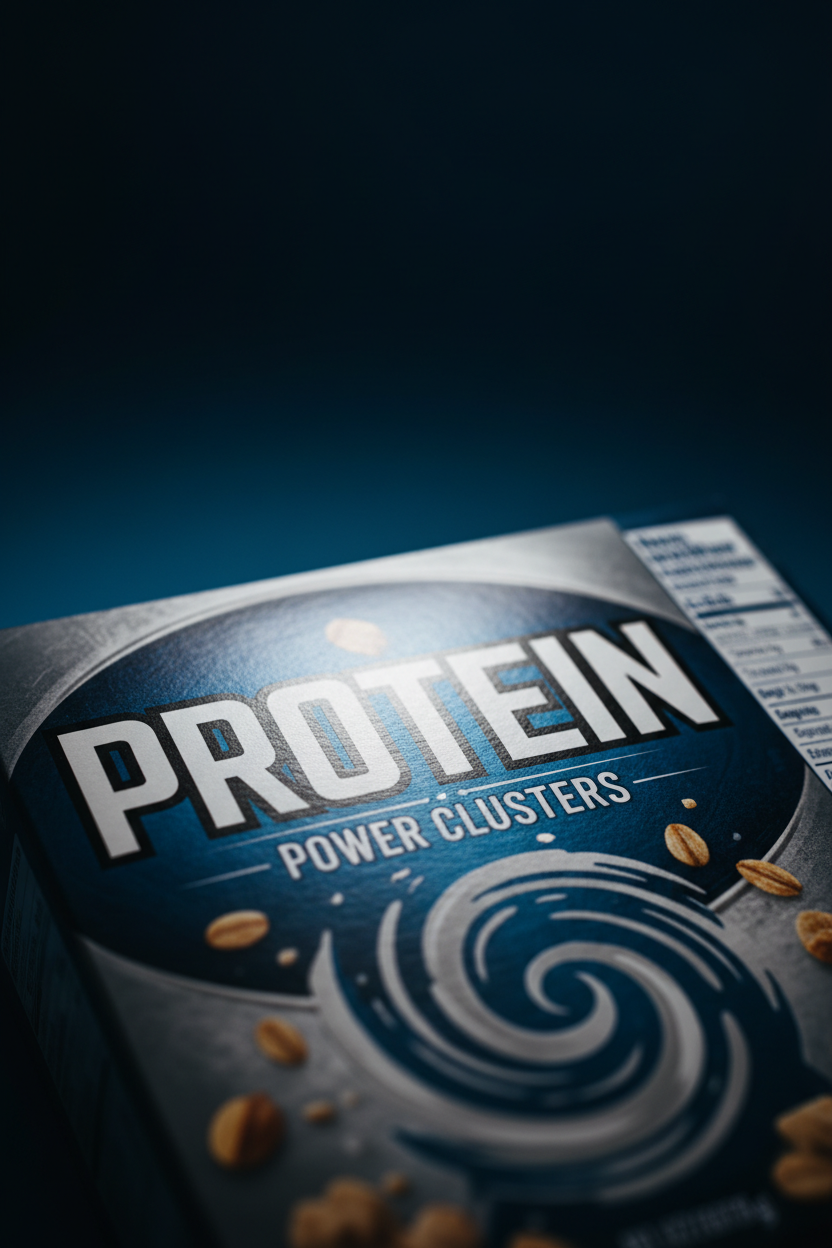
The clearest real-world example I've seen studied directly: a 2024 study in Foods surveyed 1,022 US adults comparing Special K Protein cereal to the original Special K. Participants rated the protein version as healthier. But at an equalised one-cup serving, the protein version actually contained more sugar than the original, 9.34g versus 4g, and 54.5% of participants didn't perceive any sugar difference at all (McKeon & Hallman, 2024). Over half were purchasing based on a health impression the label itself was quietly contradicting.
"Gluten-free" is the other big one. A 2025 analysis in Plant Foods for Human Nutrition found gluten-free packaged products typically contain more sugar and calories, less protein, and often less fibre than their regular counterparts, while costing more (Rustgi, 2025). That's despite roughly 25% of Americans buying gluten-free products against an estimated 1% coeliac prevalence, most of that market isn't avoiding gluten for medical reasons, it's buying on a health impression the label creates rather than actual nutritional superiority.
What this means for you
The fix isn't distrust of every label, it's checking the number the claim doesn't cover. If a product says "protein," check the sugar line. If it says "gluten-free," check the fibre and protein lines, not just the absence of gluten. If it says "natural" or "no artificial anything," that claim tells you nothing about sugar, sodium, or calorie density, it's not regulated the way "low fat" or "high protein" are. The rule I use: read past the front-of-package claim to the actual nutrition panel before assuming anything about a product's overall profile.
Two more categories worth the same scrutiny, even though I don't have a dedicated study to cite for either: flavoured yoghurt, where the "live cultures" or "protein" claim on the front sits above a sugar content that can rival dessert, and fruit juice labelled "no added sugar," which is often true and still irrelevant, the sugar was never added, it's just naturally concentrated to the point where a small glass carries as much sugar as the whole fruit would, without the fibre that slows absorption. "No added sugar" is an accurate claim about origin, not a claim about total sugar content, and the two get conflated constantly.
The biotype angle
This trips up health-conscious eaters across every biotype, but I see it most with endomorphs actively trying to manage blood sugar and calorie intake, who are the most likely to reach for "protein" or "low-sugar" labelled products specifically because of the health claim, and the most affected when that claim is quietly misleading on the metric they actually care about. Ectomorphs chasing protein intake are the group most likely to get genuinely fooled by the protein-halo cereal example specifically, since the claim is directly targeting their goal.
The honest verdict
The video's framing holds up better than most viral health content does, the health halo effect is real, replicated, and specifically documented for protein claims and gluten-free claims. The limitation worth naming: not every "healthy-sounding" product is deceptive, some genuinely deliver on the claim, and reflexive skepticism of every label is its own kind of unhelpful. The actual skill isn't distrust, it's a 10-second habit: read the number the claim is silent on before you decide the product earned its health reputation.
For a practical list of what to actually buy instead: → Gut Health at the Supermarket: What to Actually Put in Your Trolley
Want a nutrition approach built around your actual biotype instead of front-of-package claims?
→ Get the free Biotype Guide
References:
1. Ikonen I, Sotgiu F, Aydinli A, Verlegh PWJ. Consumer effects of front-of-package nutrition labeling: an interdisciplinary meta-analysis. J Acad Mark Sci. 2020. DOI: 10.1007/s11747-019-00663-9.
2. McKeon GP, Hallman WK. Front-of-Package Protein Labels on Cereal Create Health Halos. Foods. 2024. DOI: 10.3390/foods13081139. PMID: 38672812.
3. Rustgi S. Nutritional composition of gluten-free versus gluten-containing packaged foods. Plant Foods Hum Nutr. 2025. DOI: 10.1007/s11130-024-01264-w.