
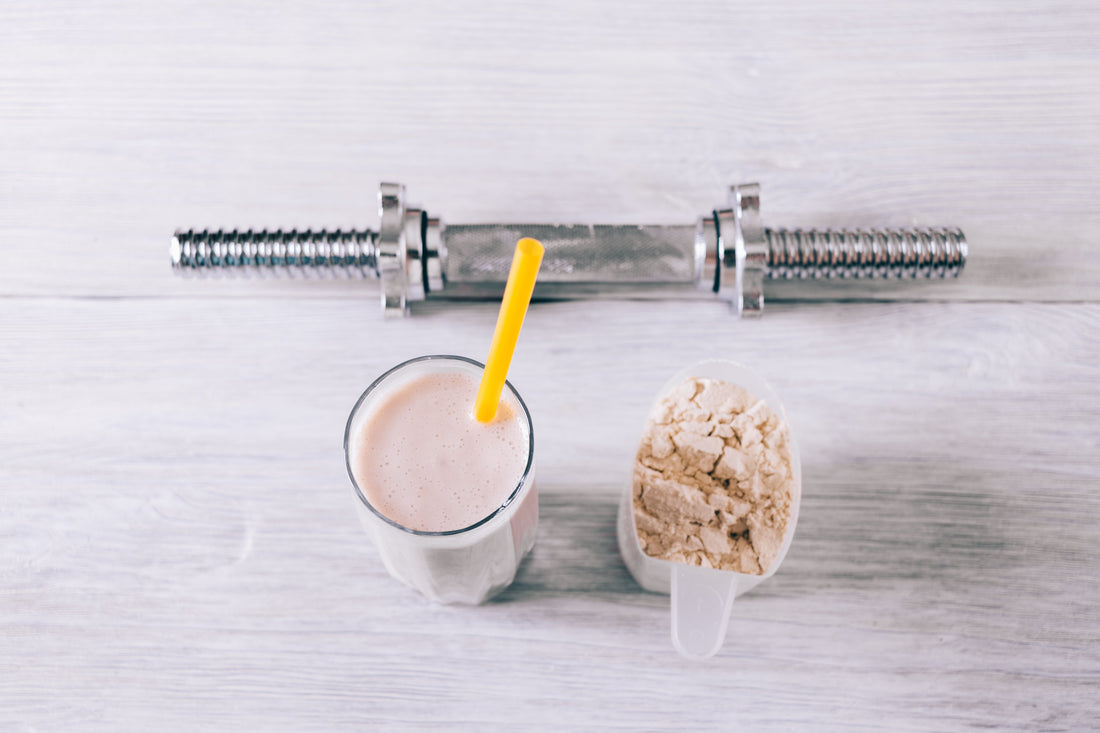
PranaOn Power Plant Protein Review: A Gut-Friendly Plant Protein That Truly Supports Muscle Growth
Share
My Honest Experience First
I drink a protein shake every single morning. It’s a non-negotiable part of my routine, both as a former professional athlete and now as a biotechnologist who still trains daily. But for me, protein choice isn’t just about muscle — it’s about digestion.
I’m lactose intolerant and allergic to casein, which immediately rules out most dairy-based proteins. Over the years, I’ve tested dozens of plant-based proteins, and if you’ve been down this road, you already know the problem: many are chalky, incomplete, or simply don’t support recovery the way whey does.
That’s exactly why PranaOn Power Plant Protein – Himalayan Salted Caramel caught my attention. It promised something most plant proteins fail to deliver: complete amino acid support, digestive comfort, and real-world performance. I tested it myself, daily, and in this review I’ll walk you through both the science and my personal experience — no hype, no exaggeration.
The Science Behind Plant Protein (And Why This One Works)
For years, whey protein dominated sports nutrition for one main reason: leucine.
Leucine is the amino acid that triggers muscle protein synthesis — the “on switch” for muscle repair and growth. Whey naturally contains a high amount of it, while many plant proteins fall short.
However, modern research shows something important: 👉 When total protein intake and essential amino acids are matched, plant protein can support muscle growth just as effectively as whey.
The challenge isn’t whether plant protein works — it’s how it’s formulated.
Why Single-Source Plant Proteins Fall Short
Most issues come from:
- Incomplete amino acid profiles
- Slightly lower leucine content
- Slower digestion
- Reduced amino acid absorption
This is where PranaOn gets smart.
A Smart Multi-Source Plant Protein Blend
PranaOn uses a blend of complementary plant proteins, typically including pea and rice protein.
Why this matters:
- Pea protein is rich in leucine
- Rice protein fills the methionine gap
- Together, they create a complete amino acid profile
This blend delivers:
- All 9 essential amino acids (EAAs)
- A balanced BCAA profile
- Muscle-building support comparable to whey when dosed correctly
Instead of relying on one plant source, the formula mimics the completeness of animal-based proteins — without the digestive drawbacks.
Added BCAAs: Closing the Gap With Whey
One legitimate criticism of plant protein is its slightly lower leucine content per gram.
PranaOn directly addresses this by fortifying the blend with additional BCAAs, including leucine. From a physiological standpoint, this is critical because it strengthens the muscle-building signal after training.
In simple terms:
- More leucine = stronger recovery signal
- Stronger signal = better muscle repair
This isn’t marketing fluff — it’s a smart correction to a known limitation of plant protein.
Probiotics & Digestive Enzymes: Where This Formula Stands Out
This is where PranaOn genuinely separates itself from most competitors.
Protein absorption doesn’t stop at the label — it happens in the gut.
Research shows that:
- Digestive enzymes help break protein into absorbable amino acids
- Certain probiotic strains improve amino acid bioavailability
- A healthier gut absorbs nutrients more efficiently
One study demonstrated that adding probiotics to pea protein increased amino acid absorption compared to pea protein alone.
PranaOn includes:
- Digestive enzymes to support breakdown
- Probiotics to enhance absorption
- A gut-friendly approach that reduces bloating
This directly addresses one of the biggest concerns people have with plant protein: “Is my body actually using it?”
MCTs for Energy, Satiety, and Recovery
The inclusion of MCTs (medium-chain triglycerides) is another underrated benefit.
MCTs are rapidly metabolized fats that:
- Provide quick, clean energy
- Support metabolic efficiency
- Help with satiety and focus
- Fit well into low-carb or busy routines
This makes PranaOn suitable not only post-workout, but also as a mid-morning or light meal replacement.
My Personal Experience & Honest Opinion
I use this protein every morning.
Because the caramel flavour is neutral, it works perfectly as-is, and when I want variety, I simply add half a teaspoon of cacao powder — no need for artificial flavour overload.
Taste & Texture
- Smooth and creamy
- Mixes easily with water or plant milk
- Not chalky or gritty
- Balanced sweetness
Digestive Comfort
This is the biggest win for me.
I can drink it:
- On an empty stomach
- Early in the morning
- Without bloating or heaviness
For someone who is lactose intolerant and casein-sensitive, that matters more than anything.
Recovery & Daily Use
I typically use it:
- Post-workout for recovery
- Mid-morning when work is busy
- As a consistent daily protein base
Recovery feels steady, energy is stable, and digestion stays calm — exactly what a protein should do.
Limitations (Full Transparency)
No product is perfect.
- Slightly thicker than whey
- Requires a bit more liquid
- Digests slower than whey isolate
But these are minor trade-offs, especially when balanced against gut comfort and ingredient quality.
Who This Is For (And Who It’s Not)
Ideal for:
- Athletes and active people
- Anyone avoiding dairy
- People with digestive sensitivity
- Vegans and vegetarians
- Busy professionals
- Gut-health focused individuals
Best timing:
- Post-workout
- Morning protein intake
- Mid-afternoon shake
- Smoothies for extra calories
If whey causes bloating, discomfort, or inflammation for you, this is one of the cleanest alternatives available.
Final Thoughts & Practical Takeaway
PranaOn Power Plant Protein is one of the few plant-based formulas that genuinely competes with whey when it comes to muscle support, recovery, and amino acid completeness.
It’s thoughtfully formulated, digestion-friendly, and enhanced with probiotics, enzymes, BCAAs, and MCTs — not for marketing, but for real physiological benefit.
If you care about lean muscle, gut health, and long-term consistency, this is a smart daily habit — and yes, it’s the one I keep in my own kitchen.