
Nuzest Clean Lean Protein Rich Chocolate: Three Ways I Actually Use It
Share
Affiliate disclosure: Nuzest has provided this product as part of an ongoing content partnership. I only talk about products I've actually used and would recommend regardless.
I've been using Nuzest Clean Lean Protein Rich Chocolate for a few weeks now, three different ways. Here's the honest breakdown, ingredient by ingredient, with the actual research behind each use case.
This is a pea protein isolate, 20g protein per 25g serving, 0g sugar, sweetened with thaumatin instead of sugar or artificial sweeteners. Dairy-free, which matters to me directly — I don't touch whey. I've used it three ways: baked into a protein cake, blended into a shake with extra raw cacao, and as a post-workout recovery shake with banana and peanut butter. Each use case has different science behind it, and I want to be straight about where that science is strong and where it's thinner than the supplement industry usually admits.
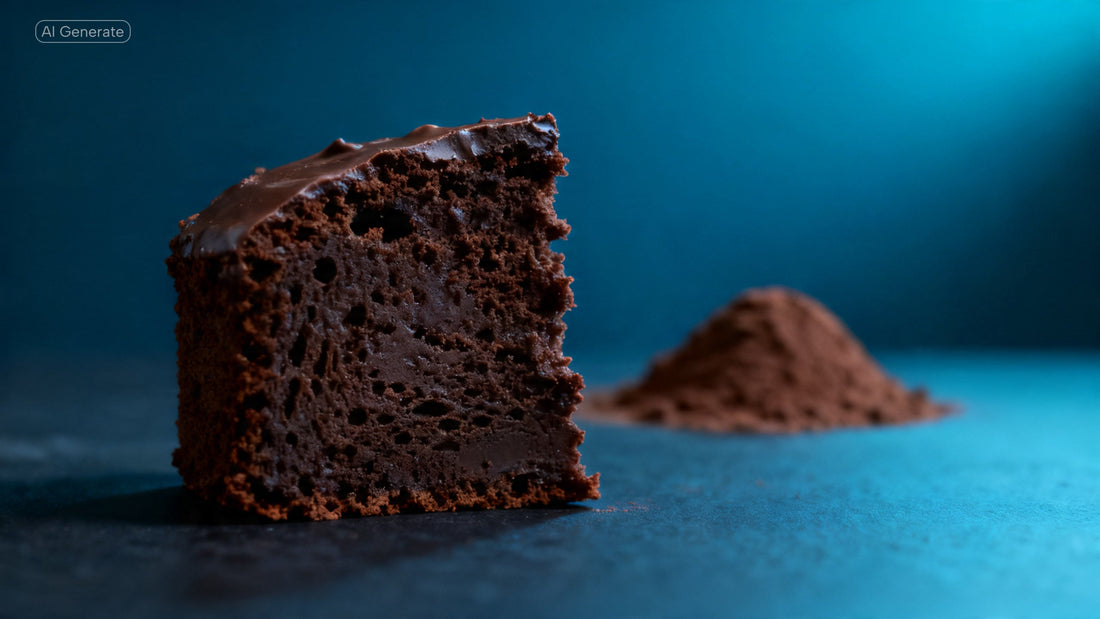
1. Baking it into a cake — does heat kill the protein?
This is one of the most persistent myths in the gym world, and it's simply wrong. When you bake a protein powder, the protein denatures — the molecule unfolds, like a coiled spring stretching out. That's what heat does to protein structure generally, whether it's a protein powder, an egg, or a piece of chicken. But denaturation is a change in shape, not a change in chemistry. The amino acids themselves, including the leucine that triggers muscle protein synthesis, are still exactly where they were. This is well established across nutrition science sources reviewing the topic, not a fringe claim.
If anything, denatured protein can be slightly easier for your digestive enzymes to break down, since the unfolded structure is more accessible than the tightly-folded native form. The one genuine caveat is the Maillard reaction — the browning reaction — which at very high sustained temperatures can reduce the bioavailability of certain amino acids, particularly lysine. At normal baking temperatures (170–180°C, 12–20 minutes), this effect is minimal. This product's clean formulation — pea protein isolate, cocoa powder, natural chocolate flavour, thaumatin — also has no lactose to accelerate that reaction the way dairy-based proteins can.
My protein cake: 1 scoop (25g) Clean Lean Protein Rich Chocolate, 1 tbsp melted coconut oil, 1 tbsp raw cacao powder, 2 eggs, 2 tbsp almond milk, 1 tbsp almond butter, ½ tsp baking powder. Baked at 175°C for 15–18 minutes. It held together well and didn't have the chalky, gritty texture I've had with other pea proteins in baking.
2. Adding extra raw cacao — flavour hack or something more?
I add a tablespoon of raw cacao powder on top of the cocoa already in the product, and the reason isn't really about flavour. Cacao is rich in epicatechin, a flavanol that activates an enzyme called eNOS — your body's nitric oxide production pathway. Nitric oxide widens blood vessels, which theoretically improves oxygen and nutrient delivery to working muscle during training.
Here's where I have to be more careful than the typical supplement blog. There's a genuinely well-supported mechanism — cocoa flavanols do improve endothelial function and nitric oxide bioavailability; that part of the research is solid. But the specific claim that dark chocolate meaningfully boosts VO2max is weaker than it's often presented. One small 2016 trial did find a 17% VO2max increase in sedentary subjects after three months of daily dark chocolate — but with only 9 people in the active group, and the result technically missed standard statistical significance (p=0.056). A 2025 meta-analysis pooling five randomised controlled trials (144 participants total) found no significant effect of dark chocolate on VO2max overall.
So: raw cacao is a legitimate vascular-health and endothelial-function addition, well grounded in the flavanol research. Whether it meaningfully changes your VO2max specifically is genuinely unproven at a population level, whatever any one small trial suggested. I still add it — the endothelial and blood pressure benefits of cocoa flavanols have decent standalone support — but I'm not going to tell you it's going to move your VO2max, because the best current evidence says it probably won't, at least not reliably.
My double dark shake: 1 scoop Clean Lean Protein Rich Chocolate, 1 tbsp raw cacao powder, 250ml unsweetened almond milk, ½ tsp cinnamon, 1 tbsp almond butter, ice.
3. Banana + peanut butter post-workout — the classic combo, explained properly
This is the pairing sports science actually does support well. After training, your muscles are depleted of glycogen. Banana provides fast-digesting natural sugars that raise insulin — and insulin doesn't just move glucose into cells, it also helps shuttle amino acids from your blood into muscle tissue. A 2025 RCT published in the Journal of Physiology confirmed that co-ingesting protein with carbohydrate enhances amino acid availability without compromising post-exercise glycogen resynthesis — meaning you genuinely can refuel and rebuild at the same time, not one at the expense of the other. A 2025 narrative review in Sports Medicine backs this up: protein plus even a moderate carbohydrate intake meaningfully enhances recovery.
Peanut butter adds arginine, a nitric oxide precursor, plus slower-digesting fat and protein that extend amino acid delivery over the following 2–3 hours. The window that matters most is roughly 30–60 minutes post-training, when muscle cells are most insulin-sensitive.
My post-workout shake: 1 scoop Clean Lean Protein Rich Chocolate, 1 medium ripe banana, 1 tbsp natural peanut butter (no added sugar or oil), 200ml coconut water, ice. Roughly 28g protein, 32g carbs, 10g fat — close to a 1:1 carb-to-protein ratio, which lines up with the recovery literature.
The honest verdict
The protein itself performs well across all three uses — it dissolves cleanly, doesn't have the gritty texture some pea proteins have, and holds up structurally in baking. The 1,705mg of leucine per serve is a genuinely strong dose for a plant protein, on par with what triggers muscle protein synthesis effectively.
Where I'd push back on the hype: don't buy this specifically for a VO2max boost via the cocoa content — that particular claim doesn't hold up well against the pooled trial data, even though the broader cardiovascular case for cocoa flavanols is reasonable. The baking myth-busting and the banana-plus-peanut-butter recovery science are both on much firmer ground.
The biotype angle
Ectomorphs will get the most out of the baked preparation — turning a protein shake into an actual meal-like food makes it easier to hit higher total calorie and protein targets without relying purely on liquid intake.
Endomorphs benefit most from the post-workout banana and peanut butter combination specifically around training sessions, rather than as a between-meal snack, since the insulin-sensitivity window is time-limited and most useful right after exercise.
Mesomorphs in regular training can use all three preparations interchangeably depending on context — baked for convenience, the cacao shake for a cardiovascular-focused day, banana and peanut butter specifically post-workout.
Want a training and nutrition program built around your actual biotype — not a generic plan?
→ milenium.com.au/pages/biofit-training
References:
1. Taub PR et al. Beneficial effects of dark chocolate on exercise capacity in sedentary subjects. Food & Function, 2016. DOI: 10.1039/c6fo00611f
2. Mehdipour A et al. Response of VO2max to dark chocolate consumption in healthy subjects: a systematic review and meta-analysis. Physiological Reports, 2025. DOI: 10.14814/phy2.70256
3. Naderi A et al. Nutritional Strategies to Improve Post-exercise Recovery and Subsequent Exercise Performance: A Narrative Review. Sports Medicine, 2025. DOI: 10.1007/s40279-025-02213-6
4. Hannon SC et al. Co-ingesting protein with dual-source carbohydrate enhances amino acid availability without compromising post-exercise liver glycogen resynthesis. Journal of Physiology, 2025. DOI: 10.1113/JP288473