By Hugo Novais — biotechnologist, former pro swimmer, and a rotating 12-hour shift worker myself.
It's 3 a.m. Someone's brought in doughnuts, your stomach feels like a balloon, and you've still got four hours on the clock. If you work nights, rotating rosters or 12-hour shifts, you know the feeling. Most nutrition advice doesn't help, because it assumes breakfast at 7 and bed at 10.
The good news: some of the best research on eating during night shifts has been done right here in Australia. Here are the four rules I took from it — the same rules I use on my own night blocks.
Why night eating feels different
Your body runs a master clock in the brain, set mostly by light, and "local" clocks in your gut, liver and pancreas that also respond to when food arrives. On nights, those clocks drift apart. In a classic experiment where healthy volunteers ate and slept about 12 hours out of phase, their glucose after meals rose despite higher insulin, and their normal daily cortisol rhythm reversed (Scheer et al., 2009).
In plain English: the same meal is handled differently at 2 a.m. than at 2 p.m.
Meal, snack or nothing? What the Adelaide studies found
Researchers at the University of South Australia put healthy adults through four simulated night shifts. At 12:30 a.m. each group had either a full meal, a small snack, or nothing — with the same total food across 24 hours.
- Glucose: glucose tolerance worsened most in the meal group, less in the snack group, and least in the no-food group (Centofanti et al., 2025).
- Hunger and alertness: the no-food group was hungriest, but the snack group felt the least sleepy — less than both the meal and no-food groups (Gupta et al., 2019).
- The drive home: after a full meal at night, simulated driving at 7:30 a.m. was worse than after a snack or nothing (Gupta et al., 2021).
These were lab studies in healthy volunteers, so they don't tell us everything about real workplaces. But the pattern is clear enough to act on: snack, don't feast.
The four anchors
On a rotating roster there's no "normal day", so instead of a fixed meal plan I use four anchors that stay the same whatever shift I'm on:
- The Pre-Shift Main. Your biggest meal lands 1–2 hours before the shift: a palm or two of protein, half a plate of veg, a fist of high-fibre carbs and a little healthy fat.
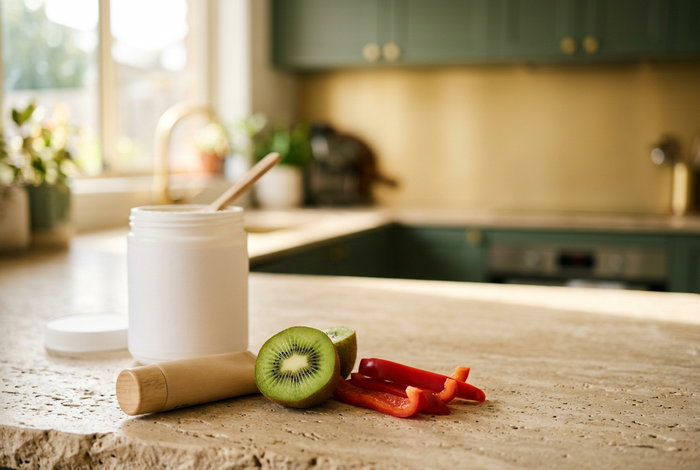
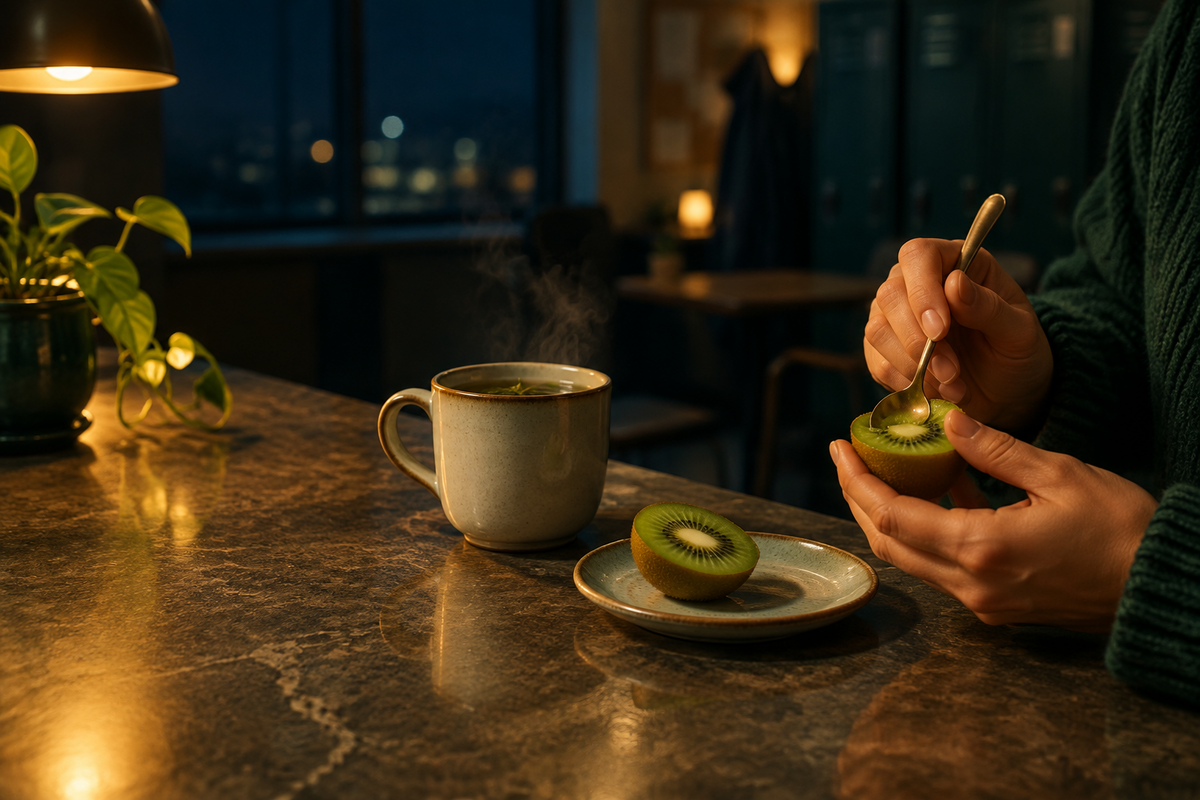
- The Night Snack Rule. Between midnight and 6 a.m., one small planned snack with protein and fibre — ideally before 2 a.m. My go-to: two boiled eggs, two green kiwifruit and carrot sticks.
- The Quiet Window. Roughly 2–6 a.m., water or herbal tea only. If you're genuinely shaky, eat something small — it's a target, not a punishment.
- The Light Landing. After a night shift, a small protein-first breakfast (around 20 g of protein) 30–60 minutes before your day-sleep — not a drive-through feast.
Why kiwifruit?
Constipation and bloating are common on night blocks. In a US trial, two green kiwifruit a day, prunes, or psyllium all increased weekly bowel movements in adults with chronic constipation; kiwifruit also improved bloating scores and had the fewest side effects (Chey et al., 2021). They're cheap, they travel well, and you can eat them with a spoon at 1 a.m.
Your caffeine cut-off
Caffeine helps performance on shifts, but timing matters. In a controlled study, 400 mg of caffeine taken even six hours before bed significantly disrupted sleep (Drake et al., 2013). If you sleep at 8 a.m. after a night shift, your last coffee or energy drink should be around 2 a.m. — earlier if you can.
Protein and fibre: two numbers for your roster
- Protein: about your body weight in kg × 1.4 grams a day, with at least 25 g in your Pre-Shift Main. Higher-protein diets of around 1.2–1.6 g/kg help with appetite control (Leidy et al., 2015).
- Fibre: Australia's Adequate Intake is 25 g a day for women and 30 g for men (NHMRC). Build up over two weeks so your gut can adapt.
Get the full 21-day plan
I've turned all of this into a short book: The Night Shift Gut Reset — Book 1 of my BioFit Blueprint Series. It includes the full Anchor System for day, night and changeover days, a 21-day plan with daily checkboxes, 11 batch-friendly recipes, troubleshooting, and every reference.
Get The Night Shift Gut Reset on Amazon Kindle — free with Kindle Unlimited.
And if you want your anchors, protein and fibre targets built around your roster, body and gut response, that's exactly what the BioType Nutrition Blueprint does. Your first consultation is free: book it here and mention the book.
This article is general education, not medical advice. See your GP if you have blood in your stool, black stools, unexplained weight loss, persistent pain, vomiting, difficulty swallowing, frequent reflux, or bowel changes lasting more than a few weeks.